Harvard Professor reveals the Science of Happiness in 15 minutes | Arthur Brooks [ARC 2025]
Category Archives: Positive Psychology
Podcast of the week: Curiosity with Jay Shetty @ On Purpose
Jay shares five reasons and four ways to include curiosity as your go to Habit.
By being curious, you will be:
- More open minded.
- Enjoying the world around you.
- Excited about what is going on in your life.
- Increasing your awareness of the world.
- Enhancing your chances of experiencing flow and therefore happiness.
- Learning new things.
- Building your confidence.
- Improving your job performance.
Source: Here.
Podcast of the week: Shawn Achor @ Jordan Harbinger
I love podcasts–heck we all do. Now I thought I would shine the light on specific episodes that caught my ears. First up: Happiness Researcher, Shawn Achor being interviewed by Jordan Harbinger.
144: Shawn Achor | Why Success and Happiness Aren’t Mutually Exclusive
I first encountered Shawn (great name by the way) through his first work, the Happiness Advantage, a book of highly actionable ideas, as his subtitle suggests: “How a Positive Brain Fuels Success in Work and Life.” Shawn has a gift at taking research and bringing i alive. He is even better in person:
In this fast-moving and very funny talk, psychologist Shawn Achor argues that, actually, happiness inspires us to be more productive. His humor is part of why this has been viewed almost 20 Million times.
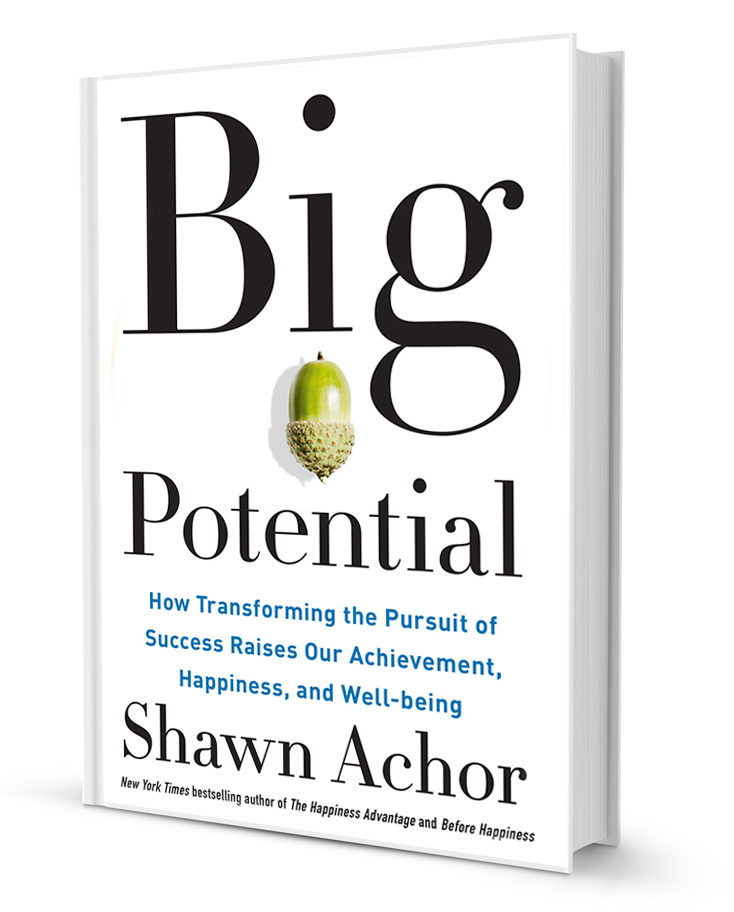 Jordan Harbinger unpacks with Shawn his new Book, Big Potential: How Transforming the Pursuit of Success Raises Our Achievement, Happiness, and Well-Being
Jordan doesn’t just skillfully interview Shawn, he enters into a a dialogue, looking for ways to help us understand why this matters and how to put it into action. Jordan’s show notes takes it a step further by adding a worksheet to help you take action on the big ideas presented during the conversation. Jordan is an incredible engaging conversationalist that makes his guests feel at ease.
Jordan’s show is well worth subscribing to and mining the back episodes.
Shawn has several books worth reading:
- The Happiness Advantage: How a Positive Brain Fuels Success in Work and Life by Shawn Achor
-
Big Potential: How Transforming the Pursuit of Success Raises Our Achievement, Happiness, and Well-Being by Shawn Achor
-
Before Happiness: The 5 Hidden Keys to Achieving Success, Spreading Happiness, and Sustaining Positive Change by Shawn Achor
Strengths fed:
- Social Intelligence
- Appreciation of Beauty and Excellence
- Achiever
- Maximizer
- Shawn also highlights the role sharing optimism plays in success
Love of Learning: Podcasts worth listening to
The podcast world is the love of learning’s best friend.
Let’s start with an interview with Josh Waitzkin, an 8x US National Chess Champion, a 2x Tai Chi Push Hands World Champion, and a Black Belt in Brazilian Jiu Jitsu. He is the author of The Art of Learning (require reading to train with me). Josh is now pursuing paddle surfing where I’ve been working with him for the last year. He is the most positive, inspirational person I know and I’m incredibly thankful he agreed to come on the show. Josh’s Core Training Principles –
- Reduced Complexity (end game before opening) – training with less variables to focus on larger, high-level principles concepts.
- Firewalking – learning from the experience of others using empathy and visualization.
- Mental Representations – have a clear mental model for a skill your practicing. Like modeling an Agassi forehand.
- Growth comes at point of resistance – we learn the most when we’re outside of our comfort zone.
- Living on the other side of pain
- Train at the few to internalize the many
- Finding your own way
- Beacon of Quality
- Depth before Breadth
- Loving the storm
- Have your compass on
- Most important Question
- The Downward Spiral – Usually it isn’t the first mistake that’s disastrous, but the first mistake tends to make the second more likely.
- Philosopher vs. Philosophologist – We tend to study the work of those who study the experts instead of studying the experts directly.
SoundCloud Widget
Think of domain and you can probably plug in and find a podcast to educate and entertain you. So many to explore, but I will highlight a few that do a deep dive. Check out our the posting for Curiosity, the sibling for a love of learning. Here are some of my favorites:
Every episode Scott Barry Kaufmann interviews the most intriguing people form the world of psychology, diving deep into their research with good humor. Some episodes to get you started:
Mike Rowe of Dirty Jobs fame, takes the guy in the bar format to share a story, a mini biography of famous people past and present. Episodes are typically five minutes, but will take you far deeper into than you would expect. Each episode starts with a avague but intriguing aspect that leaves you guessing who he is talking about. Check out these episodes:
- Episode 69: “A Little Dab’ll Do Ya!”
- Episode 67: Charlie’s Big Break
- Episode 59: A Hero Under the Influence
- Episode 54: The Boy Who Loved to Fly
- Episode 15: Sorry, Wrong Number
- Episode 3: Clean Up On Aisle 4!
LASZLO MONTGOMERY hails from Claremont California whose business takes him to China. Amateur historian does not do justice to this world class sinophile. You can listen from any episode as he does it by topic, not by chronology. Some topics take 2 or 3 or even 10 episodes. I have learned so much.
In “Hardcore History” journalist and broadcaster Dan Carlin takes his “Martian”, unorthodox way of thinking and applies it to the past. Was Alexander the Great as bad a person as Adolf Hitler? What would Apaches with modern weapons be like? Will our modern civilization ever fall like civilizations from past eras? This isn’t academic history (and Carlin isn’t a historian) but the podcast’s unique blend of high drama, masterful narration and Twilight Zone-style twists has entertained millions of listeners.
This moment demands an explanation. This show is on a mission to find it. Only what you want to know, none of what you don’t. Hosted by Michael Barbaro. Powered by New York Times journalism. Twenty minutes a day, five days a week, ready by 6 a.m.
Author Nigel Warburton reads from his book Philosophy: The Classics which is an introduction to 27 key works in the history of Philosophy.
Fresh Air from WHYY, the Peabody Award-winning weekday magazine of contemporary arts and issues, is one of public radio’s most popular programs. Hosted by Terry Gross, the show features intimate conversations with today’s biggest luminaries.
Have fun discovering the hidden side of everything with host Stephen J. Dubner, co-author of the best-selling “Freakonomics” books. Each week, hear surprising conversations that explore the riddles of everyday life and the weird wrinkles of human nature—from cheating and crime to parenting and sports. Dubner talks with Nobel laureates and provocateurs, social scientists and entrepreneurs — and his “Freakonomics” co-author Steve Levitt. After just a few episodes, this podcast will have you too thinking like a Freak. Produced by WNYC Studios, home of other great podcasts such as “Radiolab,” “Death, Sex & Money,” and “On the Media.”
Perseverance: Podcasts worth listening to
I love podcasts. I have been stumbling on some wonderful episode directly related to the concept of Strengthsmining. Today, I share a few dealing with perseverance. Identified as one of 24 character strengths, I don’t anyone questions the value of sticking to something. Angela Lee Duckworth quantified this in her work on Grit. With the release of her book, she has shown up on several podcasts like The Art of Charm. She covers
- Why we shouldn’t label others as talented.
- Why our potential is one thing — and what we do with it is another.
- How to focus on high-level goals.
- When to give up — and when to be stubborn.
- How to grow our grit and perseverance.
- And so much more…
And The Mastery Podcast, she covers
- The value of process vs. outcome
- How she first came to value grit
- Her definition of grit
- Impact of self-control on grit
- The differences between achievement and mastery
- Sunk-cost fallacy
- Setting a goal at the right level
- Is passion or perseverance harder?
- The 3 kinds of character that are most important
And Freakanomics Radio
Scott Barry Kaufman interviews Caroline Miller on her New Book, Getting Grit. Caroline’s work feels more actionable than Angela’s as you hear this podcast.
Grit is not without some controversy: NPR highlighted some on The Hidden Brain in an episode called “The Power And Problem Of Grit”
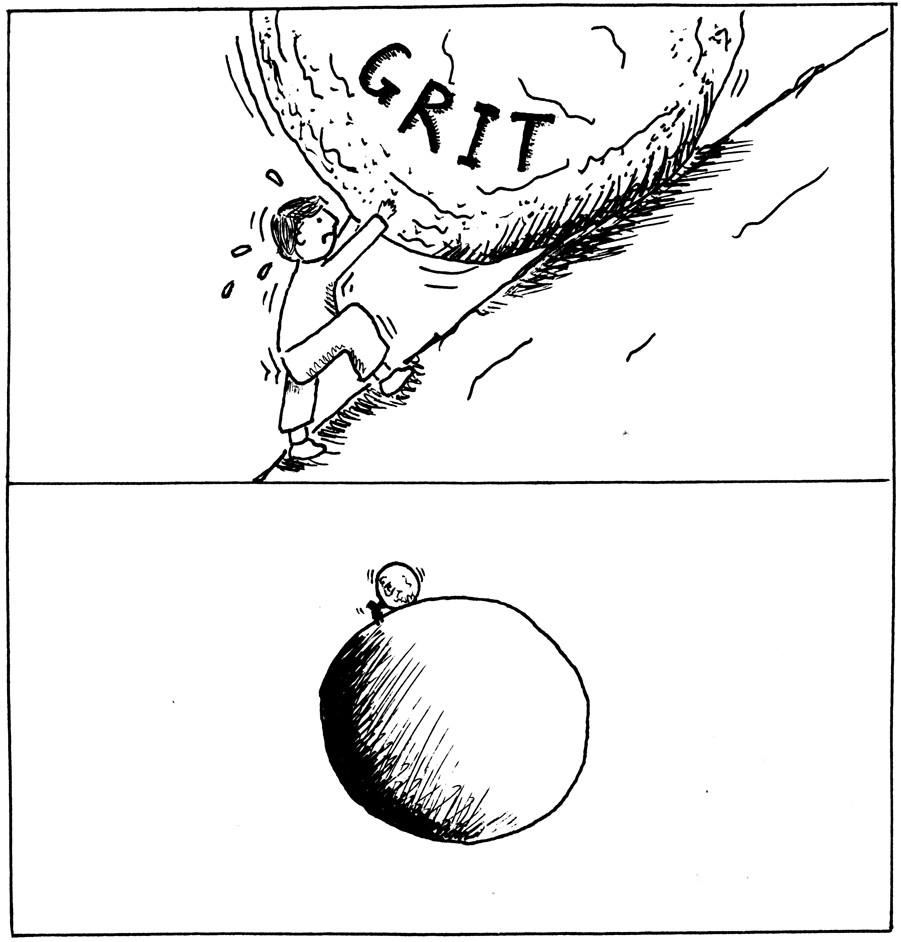
But other research has also pointed to a potential downside to grit. Like stubborness, too much grit can keep us sticking to goals, ideas, or relationships that should be abandoned. Psychologist Gale Lucas and her colleagues found in one experiment that gritty individuals will persist in trying to solve unsolvable puzzles at a financial cost. And that’s a limitation of grit: it doesn’t give you insight into when it will help you prevail and when it will keep you stuck in a dead-end.
Training in positive psychology coming to Shanghai
Want training in positive psychology training? I will be doing some training in Shanghai in January 2016.
Date: Jan 16-17
School: Shanghai American School
Title: Flourishing in Schools: Utilizing groundbreaking research and tools from positive psychology to improve student’s wellbeing.
Consultant: Shaun McElroy
Coordinator: Janet Claassen, janet.claassen@saschina.org
» Download Flyer
» Registration
PERMA Reading List: Positive Emotions
Barbara Fredrickson identified 10 positive emotions that Broaden and Build our capacities.
Joy. Joy emerges when one’s current circumstances present unexpected good fortune. People feel joy, for instance, when receiving good news or a pleasant surprise. Joy creates the urge to play and get involved, or what Frijda (1986)termed free activation, defined as an “aimless, unasked-for readiness to engage in whatever interaction presents itself” (p. 89). The durable resources created through play are the skills acquired through the experiential learning it prompts.

89,000 people can’t be wrong
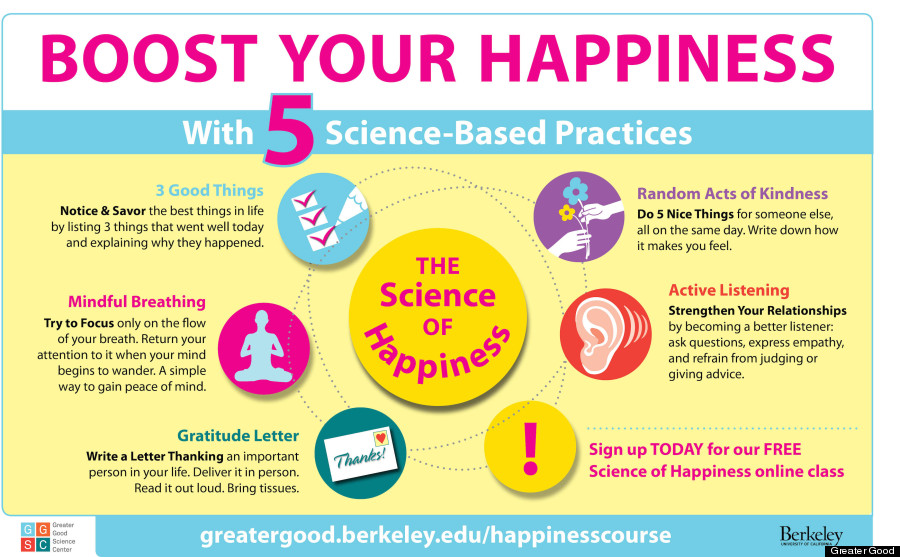
Just hours from now, Apple will unleash its own form of happiness in the form of a shiny new ithing. More importantly, UC Berkeley launches a Massive Online Course. join 89,000 of your new best buddies for this Mooc on the Science of Happiness.
The course will include:
- Short videos featuring the co-instructors and guest lectures from top experts on the science of happiness;
- Articles and other readings that make the science accessible and understandable to non-academics;
- Weekly “happiness practices”—real-world exercises that students can try on their own, all based on research linking these practices to greater happiness;
- Tests, quizzes, polls, and a weekly “emotion check-in” that help students gauge their happiness and track their progress over time;
- Discussion boards where students can share ideas with one another and submit questions to their instructors.
The Science of Happiness
Starts September 9, 2014 – Register Now!
An unprecedented free online course exploring the roots of a happy, meaningful life. Co-taught by the GGSC’s Dacher Keltner and Emiliana Simon-Thomas. Up to 16 CE credit hours available.
It is fitting this course starts the day before World Suicide Prevention Day.
Finding and building flow
What’s your flow profile?
Don’t know the answer? Well there is a personality test to help you capture it. What is flow?
Csikszentmihalyi is credited with defining the experience as “being completely involved in an activity for its own sake. The ego falls away. Time flies. Every action, movement, and thought follows inevitably from the previous one, like playing jazz. Your whole being is involved, and you’re using your skills to the utmost.”
How often do people experience flow?
“If you ask a sample of typical Americans, “Do you ever get involved in something so deeply that nothing else seems to matter and you lose track of time?” roughly one in five will say that this happens to them as much as several times a day, whereas about 15 percent will say that this never happens to them. These frequencies seem to he quite stable and universal. For instance, in a recent survey of 6,469 Germans, the same question was answered in the following way: Often, 23 percent; Sometimes, 40 percent; Rarely, 25 percent; Never or Don’t Know, 12 percent.” (Source: Psychology Today)
Nakamura and Csíkszentmihályi identify the following six factors as encompassing an experience of flow.
- intense and focused concentration on the present moment
- merging of action and awareness
- a loss of reflective self-consciousness
- a sense of personal control or agency over the situation or activity
- a distortion of temporal experience, one’s subjective experience of time is altered
- experience of the activity as intrinsically rewarding, also referred to as autotelic experience
Csíkszentmihályi follows build’s on Maslow’s notion of Peak Experience: “Peak experiences are transient moments of self-actualization.”
Jamie Wheal has spent much of his adult likfe researching flow:
He explains his ideas in this compelling TED talk: Hacking the GENOME of Flow:
His colleague goes deeper in the Rise of Superman
Getting strengths training
Now that you have taken the VIA and have a sense of the power using it can havve on students and clients, consider taking some training:
VIA Character Institute offers online webinar-based training. Not to be missed are their free Pioneer speaker series.
Coursera offers a free four week course entitled Teaching Character and Creating Positive Classrooms led by David Levine, founder of KIPP schools and leading proponent of Strengths based education. His course includes interviews with some big names from positive pscyhology.
Gallup offers a variety of training options for their strengthsquest program.
I teach a course for the Couneling training center (CTC) called Counseling Accross Cultures which embeds positive psychology into practice.