The Triple A route to happiness

Happy “Happy day” everyone. 
Yes, the UN has designated today, March 20th, as the International Day of Happiness!
What makes you happy? Vote now.
Friend’s in Shanghai Morphed Pharrell’s Happy video to get you in the mood:
Want more?
http://www.actionforhappiness.org offers up some great suggestions including 10 keys to Happiness
ALl good, but it missing a key aspect, so I got thinking but the core of happiness: Authenticity, Accepting and Appreciating
Authenticity
Living true to yourself is the heart of being yourself. Many people love ee cummings take on self: “

“To be nobody but 
yourself in a world 
which is doing its best day and night to make you like 
everybody else means to fight the hardest battle 
which any human being can fight and never stop fighting.”

But they miss where the whole passage comes from: He was responding to you young person asking for advice on becoming a poet:

A real human is somebody who feels and who expresses his or her feelings. This may sound easy. It isn’t. 

A lot of people think or believe or know what they feel—but that’s thinking or believing or knowing: not feeling. And being real is feeling—not just knowing or believing or thinking. 

Almost anybody can learn to think or believe or know, but it’s very difficult to learn to feel. Why? Because whenever you think or you believe or you know, you’re a lot of other people: but the moment you feel, you’re nobody – but – yourself. 

To be nobody – but -yourself– in a world which is doing its best, night and day, to make you everybody else–means to fight the hardest battle which any human being can fight; and never stop fighting. 

As for communicating nobody-but-yourself to others, that means working just a little harder than anybody who isn’t real can possibly imagine. Why? 

Because nothing is quite as easy as just being just like somebody else. We all of us do exactly this nearly all of the time–and whenever we do it, we are not real. 

If, at the end of your first ten or fifteen years of fighting and working and feeling, you find you’ve loved just once with a nobody-but-yourself heart, you”ll be very lucky indeed. 

And so my advice to all young people who wish to become real is: do something easy, like dreaming of freedom–unless you’re ready to commit yourself to feel and work and fight till you die. 

But where to begin? Who is this you? Start with your strengths. There are mutiple of instruments to help you idnetify them. Two are free right now:
Accepting
The Buddhist have a very strong notion of accepting things as they are. Tara Brach explains this in some detail in her talk:
Our capacity to accept this life is key to our freedom, yet there are many misconceptions about acceptance: People wonder, if acceptance makes us a doormat in relationships? Isn’t acceptance akin to resignation? Doesn’t it make us passive when what is needed is action? This talk explores some of the misunderstandings about acceptance and offers teachings on the nature of genuine and liberating acceptance.

Actor Thandie Newton covers one aspect of acceptance by telling the story of finding her “otherness” — first, as a child growing up in two distinct cultures, and then as an actor playing with many different selves.

Vunerability Researcher Brené Brown, whose earlier talk on vulnerability became a viral hit, explores what can happen when people confront their shame head-on.

Writer Andrew Solomon shares what he learned from talking to dozens of parents — asking them: What’s the line between unconditional love and unconditional acceptance?

Appreciating

There has been a growing body of work focusing on mindfulness and gratitude. Like the great philospher sang: Slow down, you move too fast. 

Character Day coming March 20th

Get involved: Let it Ripple Productions invite syou to join 750 like minded groups in premiering their 8 minute science of character. In addition to free customized versions of the film, Let it Ripple and partners like Common Sense Media will offer a list of films,games, and apps to strength particular character strengths, a free curriculum, a character strengths survey, and resource guide.

This film was inspired by the work of: Martin Seligman, Christopher Peterson, Carol Dweck, Angela Duckworth, David Levin, Paul Tough, Dominic Randolph, Neal Mayerson, Adele Diamond, Clifford Nass, The Bezos Family Foundation, The Character Lab, The VIA Institute on Character, and many more. – See more at: http://letitripple.org/character/#sthash.k4saP05c.dpuf

Calvin and Hobbes inspire Happiness

Calvin and Hobbes launched in my senior year in high school. Never acused of being too cool for school, I adored the little man’s antics and philosophical queeries to his tiger. Bill celebrated the Child’s immagination before society has beaten it out of him, Character Building dad’s, brave mothers, teachers and babysitters who will have their revenge, slimy girls and deep friendships with tigers. He tooks us back to our day dreams and reminded us to invent our own rules because with out it how can you play Calvin Ball? Bill gave the commencement speech at Kenyon College back in 1995. Poignant. Inspired. A few months latter he retired Calvin and his world: “I will be stopping Calvin and Hobbes at the end of the year. This was not a recent or an easy decision, and I leave with some sadness. My interests have shifted, however, and I believe I’ve done what I can do within the constraints of daily deadlines and small panels. I am eager to work at a more thoughtful pace, with fewer artistic compromises.”
Now, Cartoonist Gavin Aung Than, of Zen Pencils, hasn taken the key elements of that speech and set them to a Bill Waterson stylized comic strip complete with Dinosaurs, red wagons and otherwroldly landscapes (although lacking any tiger).  This panel is a celebration that living life authentically, being true to your own values, is the path to happiness. From Gavin’s profile of Bill, we learn that Watterson is not just creative, but persistent and full of intergirty. His comic strips reveal his humor, curiosity and wisdom

Happy hacks by Professor Zaks

Ok, could not resist. Happiness research continues to higher plains of understanding as research specifically looks at exact neurochemicals that contribute to happiness. Dr. Zak has studied Oxcytocin for over a decade in his neuro-economics lab as he sought to understand morales. From his research he made some profound discoveries:
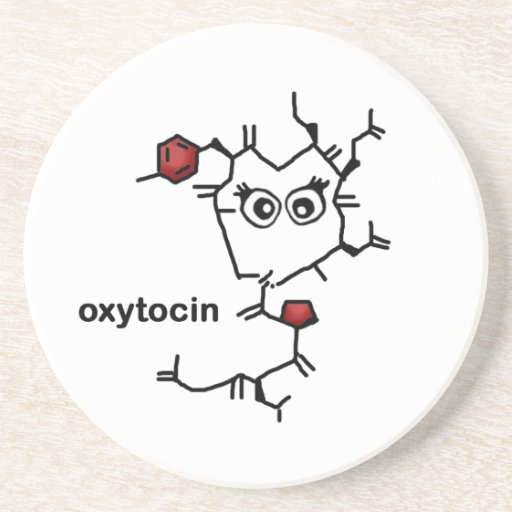
I found that individuals who release the most oxytocin — I call them “oxytocin-adepts” — were more satisfied with their lives compared to those who release less oxytocin. Why? They had better relationships of all types: Romantic, friendships, family, and they even shared more money with strangers in laboratory experiments. The moral molecule morphed in the happy molecule. Happiness largely comes from other people for social creatures like us.

Note: The ring on the right side is actually seretonin

Oxytocin looks like this: 

Now what hacks did he actually discover?

  • Hug. Touch is powerful, be it with a person or animal. 
  • Recognize and express your observations of other’s emotional states. 
  • Tell people you love them. 

These three actions stimulate release of oxytocin. Why does that matter? Oxytocin helps us connect with others, heal, increase generosity, romance, trust…among its primary function. 

Dr. Zac explains in his most excellent Ted Talke:


One of the best sets of videos on Happiness EVER!

Check out this extraordinary set of videos from Think and Be Happy. It includes a couple of hundred videos featuring top psychologists, educators and buddhists monks. 

Enjoy some past Happiness & Its Causes presentations –  a fabulous mix of leaders in psychology, science, education, business, spirituality, the arts and more! Visit our Think & Be Happy YouTube channel here for more footage.

This is Grit

Angela Duckworth defines Grit is defined as “perseverance and passion for long-term goals.” She explains in her research on Deliberate Practice Spells Success: Why Grittier Competitors Triumph at the National Spelling Bee. 

Our major findings in this investigation are as follows: Deliberate practice—operationally defined in the current investigation as the solitary study of word spellings and origins—was a better predictor of National Spelling Bee performance than either being quizzed by others or engaging in leisure reading. With each year of additional preparation, spellers devoted an increasing proportion of their preparation time to deliberate practice, despite rating the experience of such activities as more effortful and less enjoyable than the alternative preparation activities. Grittier spellers engaged in deliberate practice more so than their less gritty counterparts, and hours of deliberate practice fully mediated the prospective association between grit and spelling performance.

You can here Duckworth talk about her research at this Ted X. 


People have LOVED this concept. Her Ted X talk has been viewed 118,000 times. Her original Ted talk was viewed 255,00 times. Paul Tough’s excellent book, How Children Succeed: Grit, Curiosity, and the Hidden Power of Character, profiling her research has been number 1 in Amazon’s Educational Psychology books (it is 271 overall). It has inspired a movement encouraging people to send in their own stories of Grit:


#ThisIsGRIT is a video campaign showcasing stories of people just like yourselves, who have faced hurdles, challenges and hardships in pursuing their collegiate, professional or development education. They all share something in common: they leveraged GRIT to press through their hard times and onward to success. Here is one of my alumni sharing his trials as he moved from one school to another. 


Years of research show GRIT to be an absolute essential element in success. Do you have a GRIT story?

Submit here.

Strengths Mined: Perseverence. Discipline

How grateful are you?

“Without gratitude, life can be lonely, depressing and impoverished,” said Emmons. “Gratitude enriches human life. It elevates, energizes, inspires and transforms. People are moved, opened and humbled through expressions of gratitude.” —Dr. Robert Emmons

With US Thanksgiving on the horizon (and Canadian Thanksgiving long gone) we turn our attention to gratitude (and Turkey). Gratitude has been shown to have a very positive effect on our wellbeing:

  • Stronger immune systems and lower blood pressure;
  • Higher levels of positive emotions;
  • More joy, optimism, and happiness;
  • Acting with more generosity and compassion;
  • Feeling less lonely and isolated.

Have a look at the Happier Huamn for the source of the research, 26 studies and counting. Clearly experiencing and expressing gratitude is a good thing. How grateful are you? The Greater Good Society of UC Berkeley is offer up a gratitude survey:

2. I count my blessings for what I have in this world.

1 day training opportunity

I will be giving a pre-conference 1 day training in Bangkok for teachers, counselors and administrators in March 2014:

Title: Flourishing in Schools: Utilizing groundbreaking research and tools from positive psychology to improve student’s wellbeing. 

There has been a quiet transformation happening in some schools around the world as they focus on the conditions under which students, parents and faculty flourish? How do we improve student engagement? How can we better address our communities well-being? What is positive education and how does it impact student learning? Deep questions, but with some very compelling and surprisingly simple ideas to address them. In this workshop, we will look into the current research from positive psychology and its implications for teachers, counselors and administrators. The day will have lots of interactive activities and demonstration giving participants tools that they can use in their own communities.