Heidi Grant Halvorson now speaking at the Science of Thriving online conference

Heidi Grant Halvorson, author of 9 things successful people do differently is speaking at the Science of Thriving online conference. This online conference is free for teh first 24 hours or you can purchase the whole series for $99. Heidi Grant Halvorson is a social psychologist who researches, writes, and speaks about the science of motivation. She is currently the Associate Director of the Motivation Science Center at the Columbia Business School. Heidi is also an expert blogger for 99u, Fast Company, WSJ.com, Forbes, The Huffington Post,and Psychology Today.

Her presentation, actually an interview making it more engaging to watch, focuses on 9 things successful people do differently originally revealed in a Harvard Business Review Post:

1. Get specificWhen you set yourself a goal, try to be as specific as possible. “Lose 5 pounds” is a better goal than “lose some weight,” because it gives you a clear idea of what success looks like. Knowing exactly what you want to achieve keeps you motivated until you get there. Also, think about the specific actions that need to be taken to reach your goal. Just promising you’ll “eat less” or “sleep more” is too vague — be clear and precise. “I’ll be in bed by 10pm on weeknights” leaves no room for doubt about what you need to do, and whether or not you’ve actually done it.

Strengths mined: Focus

2. Seize the moment to act on your goals.
 Given how busy most of us are, and how many goals we are juggling at once, it’s not surprising that we routinely miss opportunities to act on a goal because we simply fail to notice them. Did you really have no time to work out today? No chance at any point to return that phone call? Achieving your goal means grabbing hold of these opportunities before they slip through your fingers.

To seize the moment, decide when and where you will take each action you want to take, in advance. Again, be as specific as possible (e.g., “If it’s Monday, Wednesday, or Friday, I’ll work out for 30 minutes before work.”) Studies show that this kind of planning will help your brain to detect and seize the opportunity when it arises, increasing your chances of success by roughly 300%.

Strengths mined: Activator

3. Know exactly how far you have left to go. Achieving any goal also requires honest and regular monitoring of your progress — if not by others, then by you yourself. If you don’t know how well you are doing, you can’t adjust your behavior or your strategies accordingly. Check your progress frequently — weekly, or even daily, depending on the goal.

Strengths mined: Focus, Discipline, Responsibility, Self-Regulation


4. Be a realistic optimist.
 When you are setting a goal, by all means engage in lots of positive thinking about how likely you are to achieve it. Believing in your ability to succeed is enormously helpful for creating and sustaining your motivation. But whatever you do, don’t underestimate how difficult it will be to reach your goal. Most goals worth achieving require time, planning, effort, and persistence. Studies show that thinking things will come to you easily and effortlessly leaves you ill-prepared for the journey ahead, and significantly increases the odds of failure.

Strengths mined: Positivity, Optomism


5. Focus on getting better, rather than being good.
 Believing you have the ability to reach your goals is important, but so is believing you can get the ability. Many of us believe that our intelligence, our personality, and our physical aptitudes are fixed — that no matter what we do, we won’t improve. As a result, we focus on goals that are all about proving ourselves, rather than developing and acquiring new skills.

Fortunately, decades of research suggest that the belief in fixed ability is completely wrong — abilities of all kinds are profoundly malleable. Embracing the fact that you can change will allow you to make better choices, and reach your fullest potential. People whose goals are about getting better, rather than being good, take difficulty in stride, and appreciate the journey as much as the destination.
 

Strengths mined:  PositivityOptomism, open-mindedness

6. Have grit. Grit is a willingness to commit to long-term goals, and to persist in the face of difficulty. Studies show that gritty people obtain more education in their lifetime, and earn higher college GPAs. Grit predicts which cadets will stick out their first grueling year at West Point. In fact, grit even predicts which round contestants will make it to at the Scripps National Spelling Bee.

The good news is, if you aren’t particularly gritty now, there is something you can do about it. People who lack grit more often than not believe that they just don’t have the innate abilities successful people have. If that describes your own thinking …. well, there’s no way to put this nicely: you are wrong. As I mentioned earlier, effort, planning, persistence, and good strategies are what it really takes to succeed. Embracing this knowledge will not only help you see yourself and your goals more accurately, but also do wonders for your grit.

Strengths mined: DisciplineResponsibilitySelf-Regulationperseverence,

7. Build your willpower muscle. Your self-control “muscle” is just like the other muscles in your body — when it doesn’t get much exercise, it becomes weaker over time. But when you give it regular workouts by putting it to good use, it will grow stronger and stronger, and better able to help you successfully reach your goals.

To build willpower, take on a challenge that requires you to do something you’d honestly rather not do. Give up high-fat snacks, do 100 sit-ups a day, stand up straight when you catch yourself slouching, try to learn a new skill. When you find yourself wanting to give in, give up, or just not bother — don’t. Start with just one activity, and make a plan for how you will deal with troubles when they occur (“If I have a craving for a snack, I will eat one piece of fresh or three pieces of dried fruit.”) It will be hard in the beginning, but it will get easier, and that’s the whole point. As your strength grows, you can take on more challenges and step-up your self-control workout.

Strengths mined: DisciplineResponsibilitySelf-Regulation, perseverence, Bravey

8. Don’t tempt fate. No matter how strong your willpower muscle becomes, it’s important to always respect the fact that it is limited, and if you overtax it you will temporarily run out of steam. Don’t try to take on two challenging tasks at once, if you can help it (like quitting smoking and dieting at the same time). And don’t put yourself in harm’s way — many people are overly-confident in their ability to resist temptation, and as a result they put themselves in situations where temptations abound. Successful people know not to make reaching a goal harder than it already is.

Strengths mined: Focus, Zest, Fairness

9. Focus on what you will do, not what you won’t do. Do you want to successfully lose weight, quit smoking, or put a lid on your bad temper? Then plan how you will replace bad habits with good ones, rather than focusing only on the bad habits themselves. Research on thought suppression (e.g., “Don’t think about white bears!”) has shown that trying to avoid a thought makes it even more active in your mind. The same holds true when it comes to behavior — by trying not to engage in a bad habit, our habits get strengthened rather than broken.

Strengths mined: FocusPositivityOptomism

The Science of Thriving: at Work and in Life Starts Monday, September 16 starting at 2:00pm Pacific Time.

First up on Monday are four online presentations, free to you and me, but does require a registration. For $99 you can own all of the presentations to download and listen at your leisure. 

Nine Things Successful People Do Differently
with Dr. Heidi Grant Halvorson
Watch for free starting on Monday, September 16, 2013 at 2:00 PM PT / 5:00 PM ET.

Heidi Grant Halvorson is a social psychologist who researches, writes, and speaks about the science of motivation. She is currently the Associate Director of the Motivation Science Center at the Columbia Business School. Heidi is also an expert blogger for 99u, Fast Company, WSJ.com, Forbes, The Huffington Post,and Psychology Today.

Learn more about Heidi


To Sell is Human
with Daniel Pink
Watch for free starting on Monday, September 16, 2013 at 3:00 PM PT / 6:00 PM ET.

Daniel H. Pink is the author of five provocative books– including the long-running New York Times bestsellers, A Whole New Mind and Drive. His latest book, To Sell is Human, is a #1 New York Times business bestseller, a #1 Wall Street Journal business bestseller, and a #1 Washington Post nonfiction bestseller. Dan’s books have been translated into 34 languages. He lives in Washington, DC, with his wife and their three children.

Learn more about Daniel


Choke: The Secret to Performing Under Pressure
with Sian Beilock
Watch for free starting on Monday, September 16, 2013 at 4:00 PM PT / 7:00 PM ET.

Sian L. Beilock is a professor in the Department of Psychology at The University of Chicago. Her research program sits at the intersection of cognitive science and education. She explores the cognitive and neural substrates of skill learning as well as the mechanisms by which performance breaks down in high-stress or high-pressure situations. Dr. Beilock’s research is funded by the National Science Foundation and the U.S. Department of Education (Institute of Education Sciences). Her book, Choke: What The Secrets Of The Brain Reveals About Getting It Right When You Have To came out in Fall, 2010.

Learn more about Sian

The Honest Truth About Dishonesty: How We Lie to Everyone, Especially Ourselves
with Dan Ariely
Watch for free starting on Monday, September 16, 2013 at 5:00 PM PT / 8:00 PM ET.

Dan Ariely is an Israeli American professor of psychology and behavioral economics. He teaches at Duke University and is the founder of The Center for Advanced Hindsight. Ariely’s talks on TED have been watched over 4.8 million times. He is the author of Predictably Irrational and The Upside of Irrationality, both of which became New York Times best sellers, as well as The Honest Truth about Dishonesty.

Learn more about Dan


The Virtues Project #3:


Continuing with the series on comparing the Virtues Manefesto from the school of life with the VIA strengths.

The Virtues Project #2: Paitence


Why it matters

The evidence for the effects of patience, though limited, seems to reflect both positive and negative outcomes.  Schnitker and Emmons (2007) found evidence for an inverse relationship between patience and negative affect and between patience and depression, but a positive relationship between patience and self-reports of certain negative health outcomes, including headaches, acne, and ulcers.  Additional research found that self-control, a strong correlate of patience, predicted better grades, less psychopathology, higher self-esteem, and less shame in students (Tangney, Baumeister, and Boone, 2004). Source

It helps up delay grattification (and not eat the marshmellow


Philip Zimbardo on Future focus

Which strengths do you need to mind to build your empthy?

Two character strengths appear to be profoundly connected to Paitence: Prudence and Self Control. Prudence is the careful deliberation of thought and action, which when directed outward, is a paitence. Holding your tounge, taking deep breaths, waiting your turn are all take self control


Capacity to love and be loved comes into play when practicing paitence as you are waiting on another soul, someone you are showing deep care for by waiting. 

 To show someone paitence is to give a gift of Kindness, with only the expectation that in the time you are giving them they will come along.

It is people smart to show paitence and hence an act of Social intelligence: 

Books worth reading


The Virtues Project #2: Empathy

Continuing with the series on comparing the Virtues Manefesto from the school of life with the VIA strengths.

The Virtues Project #2: Empathy

Why it matters

The folks at greater good point out all sorts of benefits for practicing empathy:

Which strengths do you need to mind to build your empthy?

Social intelligence: At the heart of empathy is an intuitive understand of people and what motivates them. 

Capacity to love and be loved comes into play because empathy is a sharing of the heart–their and yours. 

To show someone empthay is give a gift of Kindness, nurturing the possibility of authentic human connection. 

Bravery because listening to other’s hearts takes courage. In order to feel deeply takes an extraordinary type of courage. 

As ee cummings explains, feeling is not easy:

A poet is somebody who feels, and who expresses his feeling through words.

This may sound easy. It isn’t.

A lot of people think or believe or know they feel-but that’s thinking or believing or knowing; not feeling. And poetry is feeling-not knowing or believing or thinking.

Almost anybody can learn to think or believe or know, but not a single human being can be taught to feel. Why? Because whenever you think or you believe or you know, you’re a lot of other people: but the moment you feel, you’re nobody-but-yourself.

To be nobody-but-yourself-in a world which is doing its best, night and day, to make you everybody else-means to fight the hardest battle which any human being can fight; and never stop fighting.

As for expressing nobody-but-yourself in words, that means working just a little harder than anybody who isn’t a poet can possibly imagine. Why? Because nothing is quite as easy as using words like somebody else. We all of us do exactly this nearly all of the time-and whenever we do it, we’re not poets.

If, at the end of your first ten or fifteen years of fighting and working and feeling, you find you’ve written one line of one poem, you’ll be very lucky indeed.

And so my advice to all young people who wish to become poets is: do something easy, like learning how to blow up the world-unless you’re not only willing, but glad, to feel and work and fight till you die.

Does this sound dismal? It isn’t.
It’s the most wonderful life on earth.
Or so I feel.

Books worth checking out: 

The Virtues Project #1: Resilience

Over at the school of life, they have released the Virtues Manefesto. Over the next ten days I am going to compare these with the VIA strengths. After all, VIA stands for Values in Action. 

The Virtues Project #1: Resilience

Why it matters

According to Dr Heather Payne & Professor Ian Butler, 


Resilience is a key factor in protecting and promoting good mental health. It is the quality of being able to deal with the ups and downs of life, and is predicated on self-esteem. This in turn is generated by secure early attachments, the confidence of being loved and valued by one’s family and friends, a clear sense of self identity (personal, cultural and spiritual), a sense of agency and self efficacy (being able to make decisions and act independently) and the confidence to set goals and attempt to achieve them.

Which strengths do you need to mind to build your reslience?

Perserverence: Your ability to stick through, especially in tough times, will make all the difference in the world. 

Social intelligence: Being able to read people, to form relationships and adept to the changing social millieu builds your resilience capacity. 

Capacity to love and be loved since attachment seems to play such an important role in resiliance. 

Hope and Optimism allow you to focus on a brighter future, which is key to seeking your goals. 

Self Control: Like perseverence, self control seems central to building capacity for reliency. 

The Penn Resiliancy Project outlines the 7 abilities to building Relisiency in Children:

  • Ability 1. Being in charge of our emotions
  • Ability 2. Controlling our impulses 
  • Ability 3. Analyzing the cause of problems
  • Ability 4. Maintaining realistic optimism
  • Ability 5. Having empathy for others
  • Ability 6. Believing in your own competence
  • Ability 7. Reaching Out 

Books worth checking out:

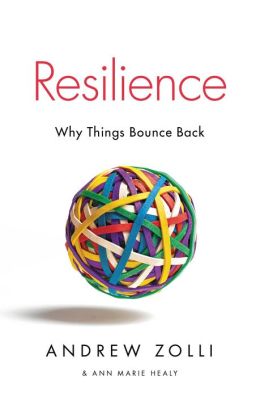
Resilience: Why Things Bounce Back Paperback


Online Conference on Thriving Preview # 6

Dr. Heidi Halvorson is hosting a virtual online conference that is free to anyone in the world that wants to attend. A lot of big names will be presenting between September 16th and 20th. so head on over to her site to register. I will try and showcase some of the major players to get you primed. 


Adam Grant – psychologist at the Wharton School of Business at the University of Pennsylvania and author of Give and Take: A Revolutionary Approach to Success. Learn more about Adam at his website and this video: 


Online Conference on Thriving Preview #5

Dr. Heidi Halvorson is hosting a virtual online conference that is free to anyone in the world that wants to attend. A lot of big names will be presenting between September 16th and 20th. so head on over to her site to register. I will try and showcase some of the major players to get you primed. 

Dan Ariely – Duke University behavioral economist, author of Predictably Irrational: The Hidden Forces That Shape Our Decisions and The Honest Truth About Dishonesty: How We Lie to Everyone–Especially Ourselves. Learn more about Dan Below and at his website


Online Conference on Thriving Preview #3

Dr. Heidi Halvorson is hosting a virtual online conference that is free to anyone in the world that wants to attend. A lot of big names will be presenting between September 16th and 20th. so head on over to her site to register. I will try and showcase some of the major players to get you primed. 


Art Markman – University of Texas at Austin psychologist, author of Smart Thinking: Three Essential Keys to Solve Problems, Innovate, and Get Things Done. Learn more about Art below and on his website