Happiness for free

Ed X is offering a free online course about Hapiness taught by Greater Good Society fellows:

The Science of Happiness

Starts September 9, 2014 – Register Now!

An unprecedented free online course exploring the roots of a happy, meaningful life. Co-taught by the GGSC’s Dacher Keltner andEmiliana Simon-Thomas

“The Science of Happiness” is a free, eight-week online course that explores the roots of a happy and meaningful life. Students will engage with some of the most provocative and practical lessons from this science, discovering how cutting-edge research can be applied to their own lives.

Created by UC Berkeley’s Greater Good Science Center, the course zeroes in on a fundamental finding from positive psychology: that happiness is inextricably linked to having strong social ties and contributing to something bigger than yourself—the greater good. Students will learn about the cross-disciplinary research supporting this view, spanning the fields of psychology, neuroscience, evolutionary biology, and beyond.
What’s more, “The Science of Happiness” will offer students practical strategies for nurturing their own happiness. Research suggests that up to 40 percent of happiness depends on our habits and activities. So each week, students will learn a new research-tested practice that fosters social and emotional well-being—and the course will help them track their progress along the way.

The course will include:

  • Short videos featuring the co-instructors and guest lectures from top experts on the science of happiness;
  • Articles and other readings that make the science accessible and understandable to non-academics;
  • Weekly “happiness practices”—real-world exercises that students can try on their own, all based on research linking these practices to greater happiness;
  • Tests, quizzes, polls, and a weekly “emotion check-in” that help students gauge their happiness and track their progress over time;
  • Discussion boards where students can share ideas with one another and submit questions to their instructors.

Getting strengths training

Now that you have taken the VIA and have a sense of the power using it can havve on students and clients, consider taking some training:

VIA Character Institute offers online webinar-based training. Not to be missed are their free Pioneer speaker series

Coursera offers a free four week course entitled Teaching Character and Creating Positive Classrooms led by David Levine, founder of KIPP schools and leading proponent of Strengths based education. His course includes interviews with some big names from positive pscyhology. 

Gallup offers a variety of training options for their strengthsquest program

I teach a course for the Couneling training center (CTC) called Counseling Accross Cultures which embeds positive psychology into practice. 

The Triple A route to happiness

Happy “Happy day” everyone. 
Yes, the UN has designated today, March 20th, as the International Day of Happiness!
What makes you happy? Vote now.
Friend’s in Shanghai Morphed Pharrell’s Happy video to get you in the mood:
Want more?
http://www.actionforhappiness.org offers up some great suggestions including 10 keys to Happiness
ALl good, but it missing a key aspect, so I got thinking but the core of happiness: Authenticity, Accepting and Appreciating
Authenticity
Living true to yourself is the heart of being yourself. Many people love ee cummings take on self: “

“To be nobody but 
yourself in a world 
which is doing its best day and night to make you like 
everybody else means to fight the hardest battle 
which any human being can fight and never stop fighting.”

But they miss where the whole passage comes from: He was responding to you young person asking for advice on becoming a poet:

A real human is somebody who feels and who expresses his or her feelings. This may sound easy. It isn’t. 

A lot of people think or believe or know what they feel—but that’s thinking or believing or knowing: not feeling. And being real is feeling—not just knowing or believing or thinking. 

Almost anybody can learn to think or believe or know, but it’s very difficult to learn to feel. Why? Because whenever you think or you believe or you know, you’re a lot of other people: but the moment you feel, you’re nobody – but – yourself. 

To be nobody – but -yourself– in a world which is doing its best, night and day, to make you everybody else–means to fight the hardest battle which any human being can fight; and never stop fighting. 

As for communicating nobody-but-yourself to others, that means working just a little harder than anybody who isn’t real can possibly imagine. Why? 

Because nothing is quite as easy as just being just like somebody else. We all of us do exactly this nearly all of the time–and whenever we do it, we are not real. 

If, at the end of your first ten or fifteen years of fighting and working and feeling, you find you’ve loved just once with a nobody-but-yourself heart, you”ll be very lucky indeed. 

And so my advice to all young people who wish to become real is: do something easy, like dreaming of freedom–unless you’re ready to commit yourself to feel and work and fight till you die. 

But where to begin? Who is this you? Start with your strengths. There are mutiple of instruments to help you idnetify them. Two are free right now:
Accepting
The Buddhist have a very strong notion of accepting things as they are. Tara Brach explains this in some detail in her talk:
Our capacity to accept this life is key to our freedom, yet there are many misconceptions about acceptance: People wonder, if acceptance makes us a doormat in relationships? Isn’t acceptance akin to resignation? Doesn’t it make us passive when what is needed is action? This talk explores some of the misunderstandings about acceptance and offers teachings on the nature of genuine and liberating acceptance.

Actor Thandie Newton covers one aspect of acceptance by telling the story of finding her “otherness” — first, as a child growing up in two distinct cultures, and then as an actor playing with many different selves.

Vunerability Researcher Brené Brown, whose earlier talk on vulnerability became a viral hit, explores what can happen when people confront their shame head-on.

Writer Andrew Solomon shares what he learned from talking to dozens of parents — asking them: What’s the line between unconditional love and unconditional acceptance?

Appreciating

There has been a growing body of work focusing on mindfulness and gratitude. Like the great philospher sang: Slow down, you move too fast. 

Character Day coming March 20th

Get involved: Let it Ripple Productions invite syou to join 750 like minded groups in premiering their 8 minute science of character. In addition to free customized versions of the film, Let it Ripple and partners like Common Sense Media will offer a list of films,games, and apps to strength particular character strengths, a free curriculum, a character strengths survey, and resource guide.

This film was inspired by the work of: Martin Seligman, Christopher Peterson, Carol Dweck, Angela Duckworth, David Levin, Paul Tough, Dominic Randolph, Neal Mayerson, Adele Diamond, Clifford Nass, The Bezos Family Foundation, The Character Lab, The VIA Institute on Character, and many more. – See more at: http://letitripple.org/character/#sthash.k4saP05c.dpuf

Happy hacks by Professor Zaks

Ok, could not resist. Happiness research continues to higher plains of understanding as research specifically looks at exact neurochemicals that contribute to happiness. Dr. Zak has studied Oxcytocin for over a decade in his neuro-economics lab as he sought to understand morales. From his research he made some profound discoveries:
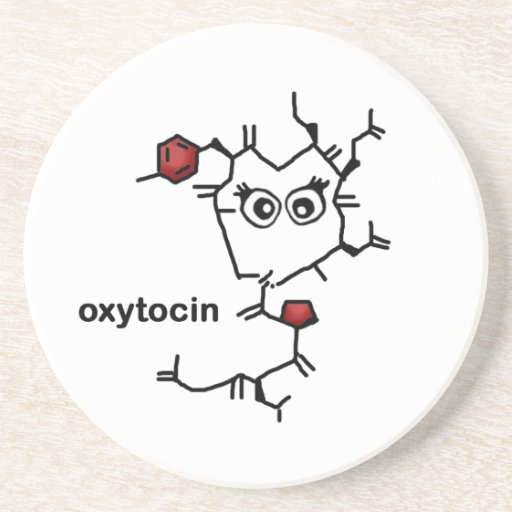
I found that individuals who release the most oxytocin — I call them “oxytocin-adepts” — were more satisfied with their lives compared to those who release less oxytocin. Why? They had better relationships of all types: Romantic, friendships, family, and they even shared more money with strangers in laboratory experiments. The moral molecule morphed in the happy molecule. Happiness largely comes from other people for social creatures like us.

Note: The ring on the right side is actually seretonin

Oxytocin looks like this: 

Now what hacks did he actually discover?

  • Hug. Touch is powerful, be it with a person or animal. 
  • Recognize and express your observations of other’s emotional states. 
  • Tell people you love them. 

These three actions stimulate release of oxytocin. Why does that matter? Oxytocin helps us connect with others, heal, increase generosity, romance, trust…among its primary function. 

Dr. Zac explains in his most excellent Ted Talke:


The opposite of depression is not happiness, but vitality

“The opposite of depression is not happiness, but vitality,” so explains Andrew Solomon in this Ted Talk. He chronicled his how experiences in The Noonday Demon: An Atlas of Depression.

Strengths Mined: Zest, Positivity, Optimism

There is a growing body of research that suggests connections to using your strengths regularly and higher levels of wellbeing. Here are some specific examples regarding Depression:

  • Using one’s signature strengths in a new and unique way is an effective intervention: it increased happiness and decreased depression for 6 months (Seligman, Steen, Park, Peterson, 2005). 
  • Using one’s signature strengths in a new way and three good things increased happiness for 6 months and decreased depression for 3 and 6 months, respectively. The early positive memory group and not the early memory group had similar benefits increasing happiness and decreasing depression for 3 months each (Mongrain & Anselmo, 2009).
  • The use of one’s top strengths leads to a decreased likelihood of depression and stress and an increase in satisfaction in law students (Peterson & Peterson, 2008).
  • Three good things (writing down three positive things that happened during the day) is an effective intervention: it increased happiness and decreased depression for 6 months (Seligman, Steen, Park, Peterson, 2005).
  • Using one’s signature strengths in a new way increased happiness and decreased depression for 6 months (Gander, Proyer, Ruch, & Wyss, 2012).
  • The use of one’s top strengths leads to a decreased likelihood of depression and stress and an increase in satisfaction in law students (Peterson & Peterson, 2008).

Money can buy happiness…

Happiness can be bought…

…if you are buying something for someone else. “Spending on other people has a bigger return for you than spending on yourself.” So says Harvard Business School professor Michael I. Norton.

The Greater Good Society outlined 5 ways giving is good for you. 

1. Giving makes us feel happy. 

2. Giving is good for our health. 

3. Giving promotes cooperation and social connection. 

4. Giving evokes gratitude.  

5. Giving is contagious. 

Strengths Mined: Gratitude, Kindess

How generous are you? You can take an online survey at Give and Take (registration required, but free) that will analyze your responses and give you a rating in three domains: Giving, Taking and Matching.


How do people give?


It is still not too late to give this season; join the crowd:

Loneliness:

“I share therefor I am” Shimi Cohen is a graphic artist who has struck a cord exploring loniness in the age of connection. Nearing a million views on You Tube, the Video addresses the connection between Social Networks and Being Lonely? Quoting the words of Sherry Turkle from her TED talk – Connected, But Alone and drawing inspiration from Dr. Yair Amichai-Hamburgers hebrew article -The Invention of Loneliness, Cohen’s senior project at Shenkar College of Engineering and Design. Cohen explores the paradoxical nature of becoming connected with technology which can isolate our natural social instincts. He spent 3 weeks sketching and translating the script into visuals, using Adobe After Effects and Cinema 4D to create the 2-D animation. 


What does positive psychology teach us about loneliness?

Leverage your strengths:

VIA has been researching the role using strengths in your life and how they impact your mental well being:

  • Using one’s signature strengths in a new way increased happiness and decreased depression for 6 months (Gander, Proyer, Ruch, & Wyss, 2012).
  • Using one’s signature strengths in a new way increased happiness for 6 months and decreased depression for 3 months (Mongrain & Anselmo-Matthews, 2012).
  • The use of one’s top strengths leads to a decreased likelihood of depression and stress and an increase in satisfaction in law students (Peterson & Peterson, 2008).
  • Using one’s signature strengths in a new and unique way is an effective intervention: it increased happiness and decreased depression for 6 months (Seligman, Steen, Park, Peterson, 2005).
  • Among high school students, other-oriented strengths (e.g., kindness, teamwork) predicted fewer depression symptoms while transcendence strengths (e.g., spirituality) predicted greater life satisfaction (Gillham et al., 2011).
  • Grateful individuals report higher positive mood, optimism, life satisfaction, vitality, religiousness and spirituality, and less depression and envy than less grateful individuals (McCullough, Emmons, & Tsang, 2002).

While the above are not specific to loneliness, you can see the connection between depression and loneliness.

Make meaning in your life
Sam Mullins struggled with finding meaning. A few years ago, he moved to Vancouver to pursue his dream of being a big city writer and actor. So he poured his heart and soul into it. And failed. But one night at work he was challenged to make a tinfoil dinosaur and his life changed…because he shared something authentic with a stranger. It was not always that way:

I have a social anxiety disorder, and an increasingly large hunch-back.  I write stories for CBC’s DNTO sometimes.  I perform one-man shows sometimes.  I have suicidal thoughts sometimes.  And then I write one-man shows about said suicidal thoughts.

The backdrop to the story is fascinating as he reflects on it and where it has all led:

 I felt like I was the poster boy for everything wrong with my generation. I felt foolish.


My sense of entitlement, my solipsism and my delusional belief that I was a unique and talented person led me to acting school. I had graduated four years later, at great expense to my parents, and then naively stepped out into the big wide world without having the slightest inkling of how to survive. And by the end of that year, I wasn’t against the ropes. I was on life-support.

So, just like that, I was back in my childhood bedroom. I was working a labour job. And I was eating a casserole prepared by my Mother every night. I didn’t know what to do next. I felt like I was lost in the universe.

Sam is doing what Victor Frankl calls making meaning:
“In some ways suffering ceases to be suffering at the moment it finds a meaning, such as the meaning of a sacrifice.”

For you see, you are always free to choose; perhaps not your experience, but the meaning you give that experience:
“Everything can be taken from a man but one thing: the last of the human freedoms—to choose one’s attitude in any given set of circumstances, to choose one’s own way.”

Frankl goes on to explain the significance of love in our lives:

“Love is the only way to grasp another human being in the innermost core of his personality. No one can become fully aware of the very essence of another human being unless he loves him. By his love he is enabled to see the essential traits and features in the beloved person; and even more, he sees that which is potential in him, which is not yet actualized but yet ought to be actualized. Furthermore, by his love, the loving person enables the beloved person to actualize these potentialities. By making him aware of what he can be and of what he should become, he makes these potentialities come true.”

By the way, NPR picked up Sam’s story for the Moth

join me on the 21 day mediation challenge

While me and thousands of others led by Deepak Chopra and Operah

Every day they will upload a guided meditation for you to join in…a three week journey, so deepak calls it. Cultivate peaceful awareness. 


Welcome to the 21-Day Meditation Experience, Desire and Destiny! We are honored you’re joining us on this journey toward living with passion and abundance! You will discover your soul’s purpose and create a life in which all things are within reach, where dreams transform into reality. 


There is a whole wack of research supporting meditation for spiritual growth, stress management and general well-being. Here are a few of the 100 benefits listed at I NEED MOTIVATION

2- It decreases respiratory rate.
12- Enhances the immune system.
13- Reduces activity of viruses and emotional distress
14- Enhances energy, strength and vigour.

40- Helps with focus & concentration

41- Increase creativity
42- Increased brain wave coherence.
43- Improved learning ability and memory.
44- Increased feelings of vitality and rejuvenation.
45- Increased emotional stability.
46- improved relationships
56- Develop will power
61- Increased job satisfaction
63- decrease in potential mental illness
66- Helps in quitting smoking, alcohol addiction
78- Grows a stable, more balanced personality

80- Helps keep things in perspective
81- Provides peace of mind, happiness
82- Helps you discover your purpose
83- Increased self-actualization.
84- Increased compassion
85- Growing wisdom
87- Brings body, mind, spirit in harmony
99- Experience a sense of “Oneness”
100- Increases the synchronicity in your life

Below is the main scientifically proven benefits.