Character Day coming March 20th

Get involved: Let it Ripple Productions invite syou to join 750 like minded groups in premiering their 8 minute science of character. In addition to free customized versions of the film, Let it Ripple and partners like Common Sense Media will offer a list of films,games, and apps to strength particular character strengths, a free curriculum, a character strengths survey, and resource guide.

This film was inspired by the work of: Martin Seligman, Christopher Peterson, Carol Dweck, Angela Duckworth, David Levin, Paul Tough, Dominic Randolph, Neal Mayerson, Adele Diamond, Clifford Nass, The Bezos Family Foundation, The Character Lab, The VIA Institute on Character, and many more. – See more at: http://letitripple.org/character/#sthash.k4saP05c.dpuf

Be Brave

What more needs to be said?

Well lots. Bravery makes us big, so suggest Marriane Williamson

“Our deepest fear is not that we are inadequate. Our deepest fear is that we are powerful beyond measure. It is our light, not our darkness that most frightens us. We ask ourselves, Who am I to be brilliant, gorgeous, talented, fabulous? Actually, who are you not to be? You are a child of God. Your playing small does not serve the world. There is nothing enlightened about shrinking so that other people won’t feel insecure around you. We are all meant to shine, as children do. We were born to make manifest the glory of God that is within us. It’s not just in some of us; it’s in everyone. And as we let our own light shine, we unconsciously give other people permission to do the same. As we are liberated from our own fear, our presence automatically liberates others.”

Bravey open us to possibility, possibility that we might experience joy, contentment, and gratitude or what Barbara Fredrickson calls her Broaden and Build Theory. Bravey overcomes our own vunerability. TED has many great talks on bravery, but the best is Brene Brown on Vunerability:


Posted in VIA

Free Stand Out Strengths Assessment

Marucs Buckingham has been instrumental in the development of strengths movement from the earliest days. He wrote the original Now, Discover Your Strengths. He left Gallup to start his own company and launched his own version of the strengthsfinder, STANDOUT

Now, folks who follow the Lean In Blog, get to take the Standout strengths assessment for free. 

The Marcus Buckingham Company is providing free strength assessments to Lean In users. After you watch the lecture, visit standout.tmbc.com/leanin and enter the code LEANIN00 to take the test and discover your strengths.

Leanin.org is inspired by and founded by Cheryl Sandberg, who also wrote the book. They aspire to:

The book Lean In is focused on encouraging women to pursue their ambitions, and changing the conversation from what we can’t do to what we can do. LeanIn.Org is the next chapter.

More about Lean In at the end of the post. As for StandOut, here is how bookoutlines summarizes it:

This assessment measures you across 9 archetypal Strengths Roles, and determines your top two.  These are the roles which reflect your natural strengths, and if pursued, will give you a natural advantage in your career.

Each Role contains the following advice:
* Phrases to describe your edge
* How to make an immediate impact
* How to take your performance to the next level
* What to watch out for

The book also contains more specific advice based on your combination of top two roles:
* Which careers fit your strengths combination
* How you can win as a leader
* How you can win as a manager
* How you can win in sales
* How you can win in client service

The 9 StandOut Strengths Roles are:

1) Advisor
You are a practical, concrete thinkier who is at your most powerful when reacting to and solving other people’s problems

2) Connector
You are a catalyst. Your power lies in your craving to bring two people or ideas together to make something bigger and better than it is now.

3) Creator
You make sense of the world–pulling it apart, seeing a better configuration, and creating it.

4) Equalizer
You are a levelheaded person whose power comes from keeping the world in balance, ethically and practically.

5) Influencer
You engage people directly and persuade them to act.  Your power is your persuasion.

6) Pioneer
You see the world as a friendly place where around every corner good things will happen.  Your power comes from your optimism in the face of uncertainty.

7) Provider
You sense other people’s feelings, and you feel compelled to recognize those feelings, give them a voice, and act on them.

8) Stimulator
You are the host of other people’s emotions.  You feel responsible for them, for turning them around, for elevating them.

9) Teacher
You are thrilled by the potential you see in each person.  Your power comes from learning how to unleash it.

The way the strengths assessment works is that you are presented with a slightly stressful stimulation and a set of choices.  You then have 45 seconds to make your choice.  The time limit helps ensure that your answers reflect your instincts, and the choices are filled with trigger words that appeal to specific strengths roles.  The result is complete strengths profile that doesn’t depend on self-assessment, and isn’t vulnerable to being gamed.

Intrigued? 

Lean In Community Welcome from LeanIn.org on Vimeo.

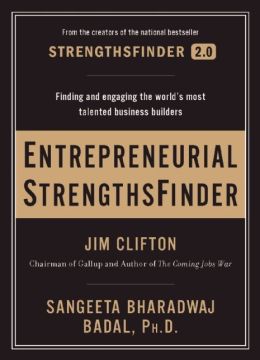
New strengths tool: Gallup’s Entrepreneurial Strengthsfinder

“Entrepreneurship is the art of turning an idea into a customr.”

–Gallup

Gallup, who originated the first strengths assessment with the Strengthsfinder, now has a new tool, The Entrepreneurial Strengthsfinder:

Gallup’s researchers and economists embarked on a decade-long study to identify the talents that successful entrepreneurs possess. Applying the same rigor Gallup used to develop the Clifton StrengthsFinder, we created, tested, and refined the Entrepreneurial StrengthsFinder assessment….The assessment reveals a person’s unique ranking and intensity of the 10 talents of entrepreneurship.

So while it shares a name with the original tool, the The Entrepreneurial Strengthsfinder diverges. It is not simply a rehashing of the 34 strengths, but rather a clear refinement, zeroing in on the ones that make successful entrepreneurs. Interviewing 5000 people, they identified the following 10 themes:

  • business focus, confidence, creative thinker, delegator, determination, independent, knowledge-seeker, promoter, relationship-builder and risk-taker.

Your personalized report also reveals whether each of the 10 talents are a dominant, contributing, or supporting talent for you. This remindes me of REALISE2. Unfortunately, no sample reports are available yet. At a cost of $40,  it is a substantial investment for a student, but for a budding entrepreneur this could prove an invaluable tool that will give helpful insight and direction to applying your talents. 

Gallup has anounced a book some time this year. Amazon is listing it for 39.99–save a whole penny off the assessment.

This I bet will be a welcome addition to the strengtsh development world. Bosses can savor “Strengths-Based Leadership.” For educators: “Teach With Your Strengths.” The sales force gets “Strengths Based Selling.” There’s even a book for frisky middle-schoolers: “StrengthsExplorer for Ages 10 to 14.” 

Gallup has posted a video in the Called To Coach segment which explores and explains this new tool. 

Flourishing in Schools: StrengthsMining workshop in Bangkok March 2014


This spring I am honored to provide a day long pre-conference workshop at EARCOS annual teacher conference in Bangkok, Thailand. Does this intrigue? Read on:

Title: Flourishing in Schools: Utilizing groundbreaking research and tools from positive psychology to improve student’s wellbeing. 
Description:
 There has been a quiet transformation happening in some schools around the world as they focus on the conditions under which students, parents and faculty flourish? How do we improve student engagement? How can we better address our communities well-being? What is positive education and how does it impact student learning? Deep questions, but with some very compelling and surprisingly simple ideas to address them. In this workshop, we will look into the current research from positive psychology and its implications for teachers, counselors and administrators. The day will have lots of interactive activities and demonstration giving participants tools that they can use in their own communities.

The conference has strong counseling strand that will make it even more worthwhile to head to the Big Weird. Some I am intrigue to check out include:


  • Bilbliotheraphy in Guidance and Counseling
  • What Parents Wish You Knew About Their Learning Disabled Child
  • Counseling and Student Council
  • What Educators Need to Know Attention Deficit Hyperactivity Disorder (ADHD)
  • The Skyscraper Model: An Introspective Approach to College Counseling
  • Sleep: The Key to Improving Students’ Learning and Behavior
  • Neuroscience Correlations to Influence the Impact of Emotion on Learning
  • Honoring Harry and Lessons Learned Along the Way (Dealing with the death of a student)
  • Intergrating Guidance Lessons with Advisory Programs
  • Gender Diversity
  • Bringing Relaxation to Stressed
  • Take a Stand: Empowering Students to Become Upstanders to Bullying
  • Third Culture Kids and Global
  • Secret Dad’s Business: Setting Up
  • Ethics Curriculum and Mindfulness

In addition, there is also a pre conferecne for college counselors with many colleges expected. 


Does Meditation work?

Time magazine says it does

Australian News site says not so much

The Chroncile of Higher Ed does a good jo taking a look at both points of views. 

Bottom line: Even a little mindfulness medition can produce some results. 

“For some of the participants, the amount of meditation they did was very small,” Goyal said. “That we saw anything was kind of neat. But we only saw it for mindfulness meditation, and we really saw nothing for TM, so there’s still a lot of work that needs to be done. Just because we didn’t find any evidence for many of the outcomes, one shouldn’t conclude that these either don’t work or that we’ve shown that they don’t work.”

Hooray for Sadness: positive emotions in treatment of depression

So can fostering feelings of connection and nurturing positive skills—as opposed to just limiting negative thought patterns—reduce suicidal plans and death fantasies? 

This is a great question and at the heart of what positive psychology aiims to serve. Normal is not enough. Thriving is the goal. While we have many tools that have truly helped in targeting suicidal ideation, The Greater Good Society explores how positive emotions can be leveraged in treatment of depression and suicidal ideation. 


While it is easy to make fun of the “turn the frown upside down” approach and scoff at “happy therapy” when it comes to treating very real mental health issues, the article does highlight two key studies targeting Graitutude, Grit and Forgiveness. 


Calvin and Hobbes inspire Happiness

Calvin and Hobbes launched in my senior year in high school. Never acused of being too cool for school, I adored the little man’s antics and philosophical queeries to his tiger. Bill celebrated the Child’s immagination before society has beaten it out of him, Character Building dad’s, brave mothers, teachers and babysitters who will have their revenge, slimy girls and deep friendships with tigers. He tooks us back to our day dreams and reminded us to invent our own rules because with out it how can you play Calvin Ball? Bill gave the commencement speech at Kenyon College back in 1995. Poignant. Inspired. A few months latter he retired Calvin and his world: “I will be stopping Calvin and Hobbes at the end of the year. This was not a recent or an easy decision, and I leave with some sadness. My interests have shifted, however, and I believe I’ve done what I can do within the constraints of daily deadlines and small panels. I am eager to work at a more thoughtful pace, with fewer artistic compromises.”
Now, Cartoonist Gavin Aung Than, of Zen Pencils, hasn taken the key elements of that speech and set them to a Bill Waterson stylized comic strip complete with Dinosaurs, red wagons and otherwroldly landscapes (although lacking any tiger).  This panel is a celebration that living life authentically, being true to your own values, is the path to happiness. From Gavin’s profile of Bill, we learn that Watterson is not just creative, but persistent and full of intergirty. His comic strips reveal his humor, curiosity and wisdom

Happy hacks by Professor Zaks

Ok, could not resist. Happiness research continues to higher plains of understanding as research specifically looks at exact neurochemicals that contribute to happiness. Dr. Zak has studied Oxcytocin for over a decade in his neuro-economics lab as he sought to understand morales. From his research he made some profound discoveries:
I found that individuals who release the most oxytocin — I call them “oxytocin-adepts” — were more satisfied with their lives compared to those who release less oxytocin. Why? They had better relationships of all types: Romantic, friendships, family, and they even shared more money with strangers in laboratory experiments. The moral molecule morphed in the happy molecule. Happiness largely comes from other people for social creatures like us.

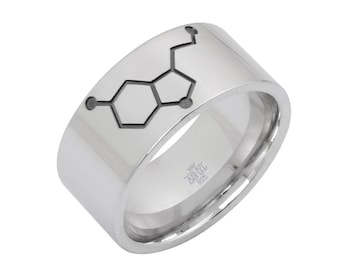
Note: The ring on the right side is actually seretonin

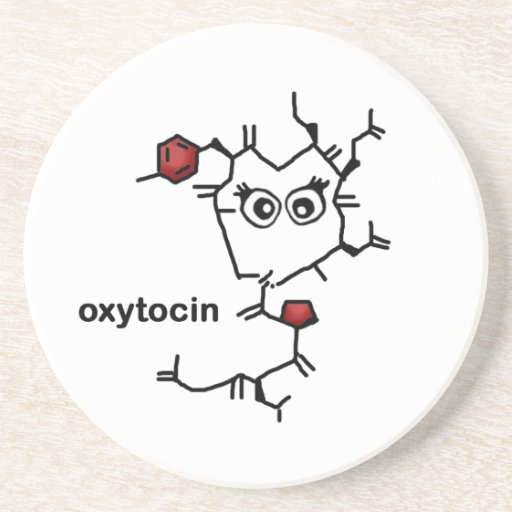
Oxytocin looks like this: 

Now what hacks did he actually discover?

  • Hug. Touch is powerful, be it with a person or animal. 
  • Recognize and express your observations of other’s emotional states. 
  • Tell people you love them. 

These three actions stimulate release of oxytocin. Why does that matter? Oxytocin helps us connect with others, heal, increase generosity, romance, trust…among its primary function. 

Dr. Zac explains in his most excellent Ted Talke:


Where is the besets, happiest schools?

Singapore of course!

Well, at least according to Buzzfeed, who compared test scores and happy student score:

The Organisation for Economic Co-operation and Development’s triennial international survey compared test scores from 65 countries. Happiness was ranked based on the percentage of students who agreed or disagreed with the statement “I feel happy at school.” Test scores were ranked based on the combined individual rankings of the students’ math, reading, and science scores.


Personally I question the results.