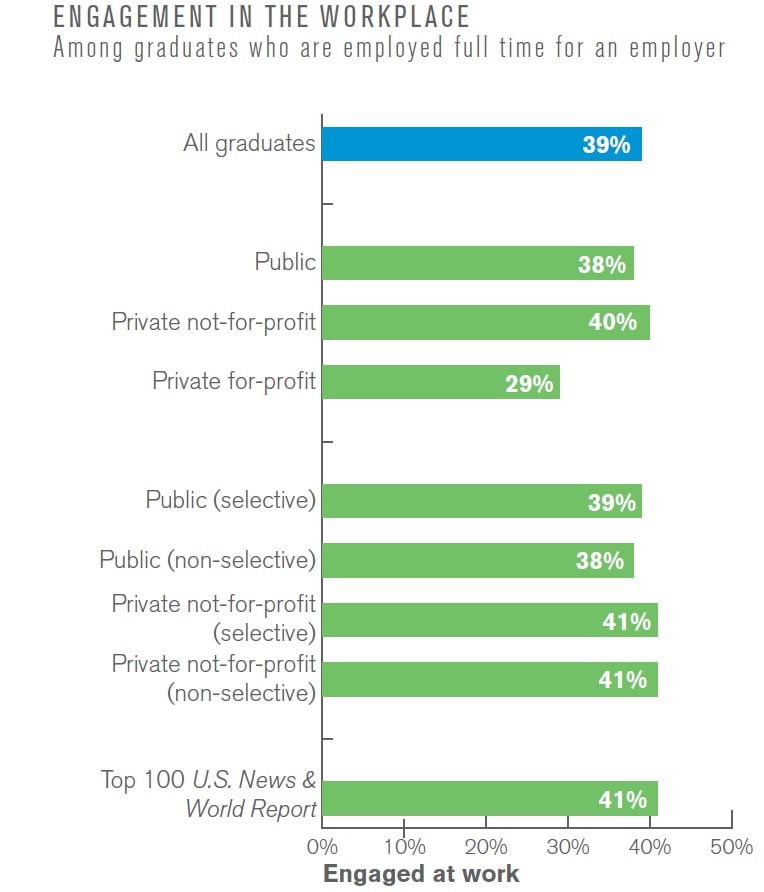
The six factors of the college experience that matter


Surprise! Where you go to college matters little to your overall wellbeing and engagement at work. Well except students attending for profit universities score lower. What matters is what you expereince when you are there. Indeed, Gallup raves ““If these magical but relatively simple elements happen to you, it’s a profound game-changer for your life and career.” What are these elements and how do you ensure they happen at univeristy for you?

I had at least one professor at [College] who made me excited about learning.

The good news: 63% of Survey respondants said they experienced this. The bad news, 37% did not. The heart of the college experience centers not on pure intellectual transfer of knowledge. If it did, MOOCs would rule. While what we learn is important, who teaches us matters even more. As Laurent Daloz Observed in Effective Teaching and Mentoring:


“For good teaching rests neither in accumulating a shelfful of knowledge nor in developing a repertoire of skills. In the end, good teaching lies in a willingness to attend and care for what happens in our students, ourselves, and the space between us. Good teaching is a certain kind of stance, I think. It is a stance of receptivity, of attunement, of listening.”

Ever since the advent of Rate My Professor, the public has become more concerned in finding the best professors. The professor rating is just one of the components that the Center for College Affordability and Productivity uses when compiling its yearly best colleges list for Forbes. Each year they provide their own ranking, which pits the following as the top 10:

  1. Duke University, NC
  2. Vanderbilt University, TN
  3. Pennsylvania State University, PA
  4. Stanford University, CA
  5. University of Wisconsin – Madison, WI
  6. University of Georgia, GA
  7. Washington University in St. Louis, MO
  8. Rollins College, FL
  9. Texas A & M University at College Station, TX
  10. University of Michigan, MI 

Princeton Review even made a book from partnering with Rate My Profess and published a list of the 300 best professors. Mt. Holyoke tops the list with 14 professors. CBS news also data mined the same source and came up with this list:

  • – Oklahoma Wesleyan University
  • – North Greenville University (S.C.)
  • – U.S. Military Academy (N.Y.)
  • – Carleton College (Minn.)
  • – Northwestern College (Iowa) 
  • – U.S. Air Force Academy (Colo.)
  • – Wellesley College (Mass.)
  • – Master’s College and Seminary (Calif.)
  • – Bryn Mawr College (Pa.)
  • – Whitman College (Wash.)
  • – Whitworth University (Wash.)
  • – Wisconsin Lutheran College
  • – Randolph College (Va.)
  • – Doane College (Neb.)
  • – Marlboro College (Vt.)
  • – Centenary College of Louisiana
  • – Pacific University (Ore.)
  • – College of the Ozarks (Mo.)
  • – Sewanee – University of the South (Tenn.)
  • – Emory & Henry College (Va.)
  • – Wabash College (Ind.)
  • – Sarah Lawrence College (N.Y.)
  • – Hastings College (N.E.)
  • – Cornell College (Iowa)
  • – Hollins University (Va.)

Anyone familiar with colleges know why liberal arts colleges show up on the list disportionally. 

USNEWS asks college adminsitrators to rate other colleges for teaching. Frankly, a strange proposition. But so is a purely number drive site like rate my professor. Prospective students should ask other students to describe their favorite classes and what made them their favorites.  

My professors at [College] cared about me as a person.


Sadly inspired teaching does not translate to caring. Only 27% of students reporting feeling cared for as a person by one of their professors. Emerson calls this a spiritual law: “There is no teaching until the pupil is brought into the same state or principle in which you are; a transfusion takes place; he is you, and you are he; then is a teaching; and by no unfriendly chance or bad company can he ever lose the benefit.”

The College Prowler provides insight based on ethri student reviews as to the colleges with the most caring professors:

  1. Brigham Young University – Idaho
  2. Liberty University
  3. California Baptist University
  4. College of Wooster
  5. Whitman College
  6. Biola University
  7. Southeastern University
  8. Indiana Wesleyan University
  9. Evangel University
  10. Wheaton College – Illinois
  11. Kenyon College
  12. Wellesley College
  13. Point Loma Nazarene University
  14. Santa Clara University
  15. Cedarville University
  16. Mount Holyoke College
  17. California Lutheran University
  18. Abilene Christian University
  19. Whitworth University
  20. Bowdoin College
  21. Claremont McKenna College
  22. Pomona College
  23. Washington & Lee University
  24. Corban University
  25. Goucher College


“One looks back with appreciation to the brilliant teachers, but with gratitude to those who touched our human feelings.  The curriculum is so much necessary warm material, but warmth is a vital element for the growing plant and for the soul of the child.” Carl Jung


I had a mentor who encouraged me to pursue my goals and dreams.

Mentors matter, yet only 22% report having one. Like the above two categories, this item reminds us that central to higher education is the role professors play in their students life. 

“Many of us carry memories of an influential teacher who may scarcely know we existed, yet who said something at just the right tim e in our lives to snap a whole world into focus.” Daloz has written extensively on the role profesor play in college students life:

“We are for some of our students someone who shows them the way through what is often a very confusing and frightening jungle in the academic world . So I think that it is worth recognizing that we are doing work which hooks into deeper levels of the psyche even though we may not be consciously or deliberately carrying out work at that level.

…Our job does not involve simply helping students to solve their own interpersonal problems extraneous to their schoolwork. Nor are we in business solely to pump information into students’ minds. Our job is to help students to integrate what they are learning in the academic world with how they process knowledge and how they are growing in an epistemological way. So mentorship is firmly grounded in an interactionist perspective. It is firmly grounded in the notion that we develop through the way in which we make use of knowledge in the environment and also through the way that is concerned with the growth in process and in the form of our thought. You can’t simply separate process and content.”

Plane and simple, as Chris Peterson would say:


I worked on a project that took a semester or more to complete.

But that is hard work. So hard in fact only 32% of gradautes indicat that this was true for them. In the Yale Report of 1828, the faculty presented a fundamental arguement for not just a broad (liberal arts and science education), but also a pedagogy that engaged students:


The two great points to be gained in intellectual culture, are the discipline and the furniture of the mind; expanding its powers, and storing it with knowledge. The former of these is, perhaps, the more important of the two. A commanding object, therefore, in a collegiate course, should be, to call into daily and vigorous exercise the faculties of the student. Those branches of study should be prescribed, and those modes of instruction adopted, which are best calculated to teach the art of fixing the attention, directing the train of thought, analyzing a subject proposed for investigation; following, with accurate discrimination, the course of argument; balancing nicely the evidence presented to the judgment; awakening, elevating, and controlling the imagination; arranging, with skill, the treasures which memory gathers; rousing and guiding the powers of genius. All this is not to be effected by a light and hasty course of study; by reading a few books, hearing a few lectures, and spending some months at a literary institution.

While the report does specifically state long term projects, it clearly derides a minimalist approach. Students would be well advised to seek out colleges that require or offer. For example, every student at Princeton must complete a senior thesis which not only “provides a unique opportunity for students to pursue original research and scholarship in a field of their choosing,” but also requires the student to work one on one with a faculty member. 
The Capstone requirment at University of Illinois at Chicago “is intended to provide students with a scholarly experience that incorporates concepts and techniques learned throughout their undergraduate careers, as well as allowing students to make original scholarly contributions to their academic disciplines.”
Macalster’s capstone experience consists of three key elements:
  1. participation in the four-credit course, Senior Seminar (Biology 489),
  2. the production of a major thesis-driven, analytical paper during the senior year, written through multiple drafts, which includes a thorough review of the literature; and
  3. the delivery of an oral presentation to the department or at an approved undergraduate or professional research conference during the senior year.


Colleges particularly known for the Capstone experience include


  • Alverno College 
  • Brown University 
  • Carleton College 
  • Clemson University 
  • College of Wooster 
  • Duke University 
  • Elon University 
  • Georgia Institute of Technology 
  • Kalamazoo College 
  • Miami University—​Oxford 
  • Portland State University 
  • Princeton University 
  • Reed College 
  • University of Pennsylvania 

The National Survey of Student Engagement, which examines college students’ activities annually, shows a steady increase in those completing capstones or senior theses. In 2009, 64% of students reported doing such a project, up 55% from 2000 when the survey began. Some view it as a Can’t miss experience. Some say thesis are forever


I had an internship or job that allowed me to apply what I was learning in the classroom.

Surpingsly, Gallup found only 29% of graduates had participated in a relevant internship. Others place the rate at 85%. Then again, the type of internship clearly matters. Some colleges are clearly light years ahead with up to 100% participation in internships. 


School name (state)

Percent of undergrads graduating with internship experience

Bennington College (VT)

100

College of the Atlantic (ME)

100

Delaware Valley College (PA)

100

Holy Cross College (IN)

100

Lasell College (MA)

100

Massachusetts Maritime Academy

100

Wagner College (NY)

100

William Peace University (NC)

100

Burlington College (VT)

94

American University (DC)

90

Bentley University (MA)

90

Husson University (ME)

90

Taylor University (IN)

90

  • Other colleges that US news identified as particulary strong in internships include:
  • Berea College 
  • Cornell University 
  • Drexel University 
  • Elon University 
  • Elon, NC
  • George Washington University 
  • Georgia Institute of Technology 
  • Massachusetts Institute of Technology 
  • Northeastern University 
  • Purdue University—​West Lafayette 
  • Rensselaer Polytechnic Institute 
  • Rochester Institute of Technology 
  • University of Cincinnati 
  • Wagner College 

Another list can be found here

I was extremely active in extracurricular activities and organizations while attending [College].

Finally, how you spend time outside of class matters: 20% indicate they were active in extra-Curricular activities. This strikes me as way low. After all every college has activities. Lots and lots of activities. 


In The Idea of a University Defined and Illustrated Cardinal John Henry Newman opines that the real purpose of the university cultivates a space:

“It is the place to which a thousand schools make contributions; in which the intellect may safely range and speculate, sure to find its equal in some antagonist activity, and its judge in the tribunal of truth. It is a place where inquiry is pushed forward, discoveries verified and perfected, and rashness rendered innocuous, and error exposed, by the collision of mind with mind, and knowledge with knowledge …. It is a seat of wisdom, a light of the world, a minister of the faith, an Alma Mater of the rising generation.” 
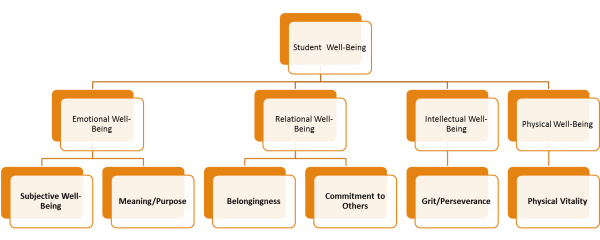


Colleges to measure wellbeing

Everyone is talking about wellbeing, from Gross National Happiness in Bhutan to the Gallup Student Poll. 


Gallup and Purdue will reveal the results of their first study next week. 

The Gallup-Purdue Index will measure the most important outcomes of higher education – great careers and lives that matter – and provide higher education leaders with productive insights for meaningful performance improvements. The initiative aims to create a national movement toward a new set of measures, created by and for higher education, and to help foster a new level of accountability for the sector.

 Gallup’s spin goes beyond are you working and how much are you earning (although it includes that). Gallup wants to understand’s alumni’s engagement:

“In the last seven days, I have felt active and productive every day,” and “I like what I do each day,” and “The mission and purpose of my organization makes me feel my job is important.” Survey takers will also be asked to respond to items such as “In the last 12 months, I have received recognition for helping to improve the city or area where I live,” and “I feel proud to be a [university name] alum,” and “I would recommend [name of university] to a friend or colleague.”


I would love if this could be paired with the National Survey of Student Engagement, which would cover the student experience through college to the end and out into the world of work.

Meanwhile, Wake Forest Universit has struck out on their own to devise an isntrument to explore wellbeing:

As you can see, the items overlap with most of key aspects that positive psychologists are exploring. 

Free mediation course from Deepak and Oprah

Inspiring wonder

While she was denied at not one art school but six, she never let it discourage her as she spent the next 10 years painting. Janet Echelman has an extraordinary career:

Echelman first set out to be an artist after graduating college. She moved to Hong Kong in 1987 to study Chinese calligraphy and brush-painting. Later she moved to Bali, Indonesia, where she collaborated with artisans to combine traditional textile methods with contemporary painting.

When she lost her bamboo house in Bali to a fire, Echelman returned to the United States and began teaching at Harvard. After seven years as an Artist-in-Residence, she returned to Asia, embarking on a Fulbright lectureship in India.

Her Ted talk installs a sense of wonder:

You can her Appreciation of Beauty and Excellence call out as she leverages her Creativity, perseverance and Curiosity.

Happiness for free

Ed X is offering a free online course about Hapiness taught by Greater Good Society fellows:

The Science of Happiness

Starts September 9, 2014 – Register Now!

An unprecedented free online course exploring the roots of a happy, meaningful life. Co-taught by the GGSC’s Dacher Keltner andEmiliana Simon-Thomas

“The Science of Happiness” is a free, eight-week online course that explores the roots of a happy and meaningful life. Students will engage with some of the most provocative and practical lessons from this science, discovering how cutting-edge research can be applied to their own lives.

Created by UC Berkeley’s Greater Good Science Center, the course zeroes in on a fundamental finding from positive psychology: that happiness is inextricably linked to having strong social ties and contributing to something bigger than yourself—the greater good. Students will learn about the cross-disciplinary research supporting this view, spanning the fields of psychology, neuroscience, evolutionary biology, and beyond.

What’s more, “The Science of Happiness” will offer students practical strategies for nurturing their own happiness. Research suggests that up to 40 percent of happiness depends on our habits and activities. So each week, students will learn a new research-tested practice that fosters social and emotional well-being—and the course will help them track their progress along the way.

The course will include:

  • Short videos featuring the co-instructors and guest lectures from top experts on the science of happiness;
  • Articles and other readings that make the science accessible and understandable to non-academics;
  • Weekly “happiness practices”—real-world exercises that students can try on their own, all based on research linking these practices to greater happiness;
  • Tests, quizzes, polls, and a weekly “emotion check-in” that help students gauge their happiness and track their progress over time;
  • Discussion boards where students can share ideas with one another and submit questions to their instructors.

The Introversion to extroversion continuum

People often equate shy with introversion. Jung defined introversion as an “attitude-type characterised by orientation in life through subjective psychic contents” (focus on one’s inner psychic activity); and extraversion as “an attitude type characterised by concentration of interest on the external object”, (the outside world). Wikipedia distinguishes shyness from introversion: “professor of psychology Bernardo J. Carducci, introverts choose to avoid social situations because they derive no reward from them or may find surplus sensory input overwhelming, whereas shy people may fear such situations.” A more complete discussion can be found on Susan Cain’s Quiet Website

Shyness and introversion are not the same thing. Shyness is the fear of negative judgment, and introversion is a preference for quiet, minimally stimulating environments. Some psychologists map the two tendencies on vertical and horizontal axes, with the introvert-extrovert spectrum on the horizontal axis, and the anxious-stable spectrum on the vertical. With this model, you end up with four quadrants of personality types: calm extroverts, anxious (or impulsive) extroverts, calm introverts, and anxious introverts.

This chart below, from The Thought Catalogue, provides a handy cheat card not just between shyness and introversion, but also extroversion and obnoxiousness (Yes that is the word they use). 

Getting strengths training

Now that you have taken the VIA and have a sense of the power using it can havve on students and clients, consider taking some training:

VIA Character Institute offers online webinar-based training. Not to be missed are their free Pioneer speaker series

Coursera offers a free four week course entitled Teaching Character and Creating Positive Classrooms led by David Levine, founder of KIPP schools and leading proponent of Strengths based education. His course includes interviews with some big names from positive pscyhology. 

Gallup offers a variety of training options for their strengthsquest program

I teach a course for the Couneling training center (CTC) called Counseling Accross Cultures which embeds positive psychology into practice. 

Getting strengths training

Now that you have taken the VIA and have a sense of the power using it can havve on students and clients, consider taking some training:

VIA Character Institute offers online webinar-based training. Not to be missed are their free Pioneer speaker series

Coursera offers a free four week course entitled Teaching Character and Creating Positive Classrooms led by David Levine, founder of KIPP schools and leading proponent of Strengths based education. His course includes interviews with some big names from positive pscyhology. 

Gallup offers a variety of training options for their strengthsquest program

I teach a course for the Couneling training center (CTC) called Counseling Accross Cultures which embeds positive psychology into practice. 

Will the happiest country in the world stand up?

Everyone says it is Denmark. Well by everyone, we specifcally mean the World Happiness Report. Then again, Gallup does not share such enthusiasm placing the land of Lego much lower down–they land 36 places behind The Philipinnes. Jetpac concurs. They exminaed smailes on instagram and concluded the happiest country to be Brazil. Denmark ranked 87th. Phillipines came in 8th. The Happy Planet Index has NONE of the above even in their top 10 with Costa Rica placing first. Like College rankings, it all comes back to to what you count. 


JetPac Instragram Smiles

World Happiness Report

Gallup

Happy Planet Index


1. Brazil 60.8

1. Denmark

Panama

Costa Rica

2. Nicaragua 59.4

2. Norway

Paraguay

Vietnam

3. Colombia 49.8

3. Switzerland

El Salvador

Colombia

4. Bolivia 48.1

4. Netherlands

Venezuela

Belize

5. Costa Rica 47.4

5. Sweden

Trinidad

El Salvador

6. Honduras 47.2

6. Canada

Thailand

Jamaica

7. Venezuela 45.2

7. Finland

Guatamala

Panama

8. Philippines 44.8

8. Austria

Phillipines

Nicaragua

9. Guatemala 42.0

9. Iceland

Ecuador

Venezuela

10. Mexico 40.1

10. Australia

Costa Rica

Guatemala


The Triple A route to happiness

Happy “Happy day” everyone. 
Yes, the UN has designated today, March 20th, as the International Day of Happiness!
What makes you happy? Vote now.
Friend’s in Shanghai Morphed Pharrell’s Happy video to get you in the mood:
Want more?
http://www.actionforhappiness.org offers up some great suggestions including 10 keys to Happiness
ALl good, but it missing a key aspect, so I got thinking but the core of happiness: Authenticity, Accepting and Appreciating
Authenticity
Living true to yourself is the heart of being yourself. Many people love ee cummings take on self: “

“To be nobody but 
yourself in a world 
which is doing its best day and night to make you like 
everybody else means to fight the hardest battle 
which any human being can fight and never stop fighting.”

But they miss where the whole passage comes from: He was responding to you young person asking for advice on becoming a poet:

A real human is somebody who feels and who expresses his or her feelings. This may sound easy. It isn’t. 

A lot of people think or believe or know what they feel—but that’s thinking or believing or knowing: not feeling. And being real is feeling—not just knowing or believing or thinking. 

Almost anybody can learn to think or believe or know, but it’s very difficult to learn to feel. Why? Because whenever you think or you believe or you know, you’re a lot of other people: but the moment you feel, you’re nobody – but – yourself. 

To be nobody – but -yourself– in a world which is doing its best, night and day, to make you everybody else–means to fight the hardest battle which any human being can fight; and never stop fighting. 

As for communicating nobody-but-yourself to others, that means working just a little harder than anybody who isn’t real can possibly imagine. Why? 

Because nothing is quite as easy as just being just like somebody else. We all of us do exactly this nearly all of the time–and whenever we do it, we are not real. 

If, at the end of your first ten or fifteen years of fighting and working and feeling, you find you’ve loved just once with a nobody-but-yourself heart, you”ll be very lucky indeed. 

And so my advice to all young people who wish to become real is: do something easy, like dreaming of freedom–unless you’re ready to commit yourself to feel and work and fight till you die. 

But where to begin? Who is this you? Start with your strengths. There are mutiple of instruments to help you idnetify them. Two are free right now:
Accepting
The Buddhist have a very strong notion of accepting things as they are. Tara Brach explains this in some detail in her talk:
Our capacity to accept this life is key to our freedom, yet there are many misconceptions about acceptance: People wonder, if acceptance makes us a doormat in relationships? Isn’t acceptance akin to resignation? Doesn’t it make us passive when what is needed is action? This talk explores some of the misunderstandings about acceptance and offers teachings on the nature of genuine and liberating acceptance.

Actor Thandie Newton covers one aspect of acceptance by telling the story of finding her “otherness” — first, as a child growing up in two distinct cultures, and then as an actor playing with many different selves.

Vunerability Researcher Brené Brown, whose earlier talk on vulnerability became a viral hit, explores what can happen when people confront their shame head-on.

Writer Andrew Solomon shares what he learned from talking to dozens of parents — asking them: What’s the line between unconditional love and unconditional acceptance?

Appreciating

There has been a growing body of work focusing on mindfulness and gratitude. Like the great philospher sang: Slow down, you move too fast.