
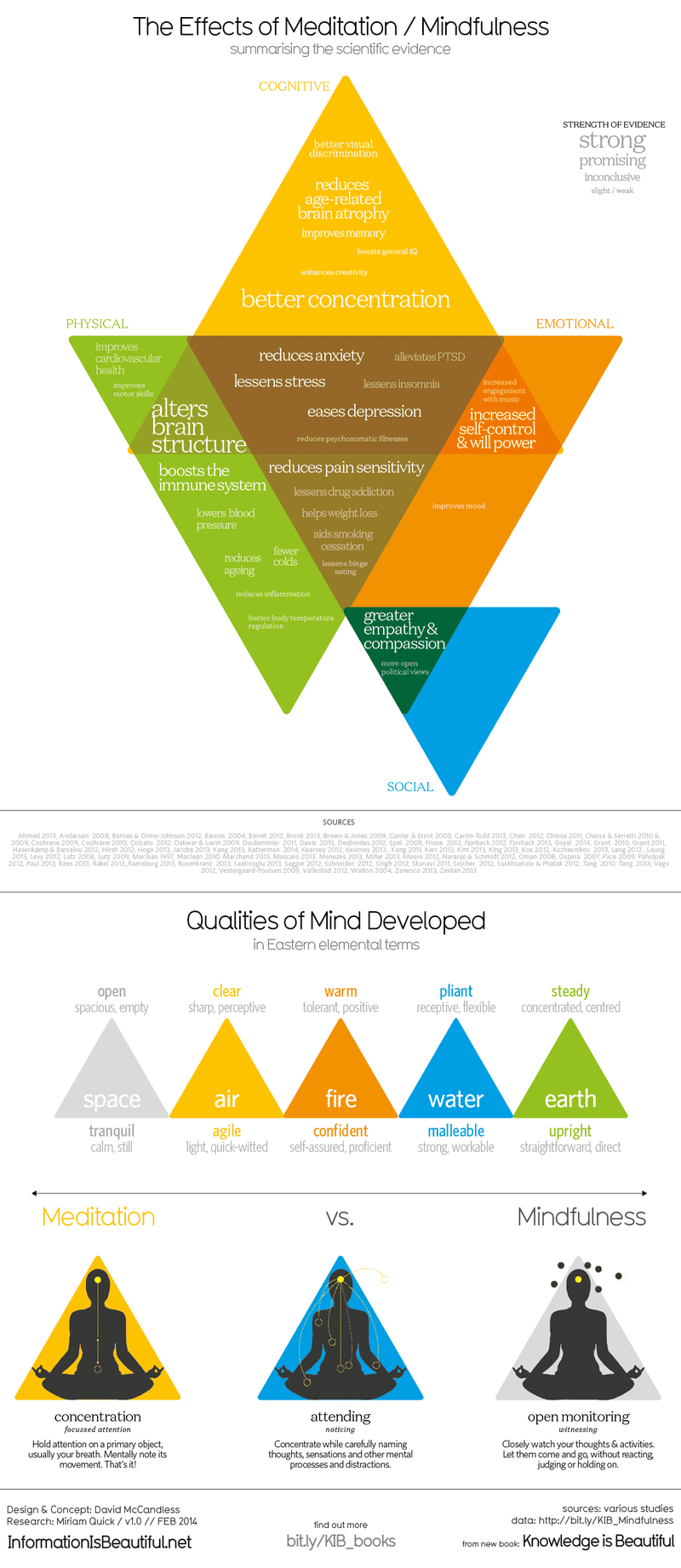
How good is mindfulness? Very good:
Ideas and inspiration for curriculum utalizing positive psychology:
Ideas and inspiration for curriculum utalizing positive psychology:
- Wellington School’s Scope and Sequence of their curriculum–unfortunately, they have removed the curriculum, but you can figure out what they were doing.
- Positive Education resources from Chinese International School.
- St. Peter’s College in Australia offers up their curriculum
- Geelong Grammar School has a comprehensive positive education site that only lacks in specifics of their curriculum.
- Greater Good Society’s website is a go to for news, videos and more. Often overlooked is the more practical Greater Good in Action which curates specific activities.
- The Penn Resilience Program for Middle school–sort of the grandmother of positive education movement–is online, including a brief description of each lesson.
- Corstone may inspire with some of their shared research in their toolkit. For example, check out their Girl’s First Program.
- Check out and join the Character Day movement–they also offer specific curriculum.
- Happy, the Movie and Disucssion Guide for MIddle/High Schoolers and for College Students.
- Character.org offers a database of lesson plans.
Comparing Strengths assessment
Different strength tools
Who is it for and what does it cost
|
|
|
|
|
|
|
|
Youth Adult |
Adult |
Youth |
Adult |
Adult |
Adult |
|
15-20 |
15 |
15 |
25 |
20 |
25 |
|
24 in order |
|
Top 3 of 10 |
Top 5 of 34 |
21 of 60 |
2 of 9 |
|
Free + |
Free + |
Free in Naviance |
$10 |
$25 |
$15 |
|
Character |
|
Talents |
Talents |
C, T and unrealised |
Strengths roles |
What it measures
|
|
|
|
|
|
|
|
6 Virtues
|
4 dimensions |
10 talents
|
4 Domains
|
5 families |
9 Strength groups
|
|
Wisdom and Knowledge
Courage
Humanity –
Justice –
Temperance –
Transcendence
|
Decisive Interactive Stabilising Cautiousness ——- Two reports: Natural Adaptive
——- 15 patterns |
Caring |
INFLUENCING STRENGTHS
EXECUTING STRENGTHS
RELATING STRENGTHS STRATEGIC THINKING
|
Being, Communicating, Motivating Relating Thinking ——- Realised Unrealised Weeknesses |
Advisor Connector Creator Equalizer Influencer Pioneer Provider Stimulator Teacher
|
List of Strengths defined
|
|
|
|
|
|
|
|
Creativity Curiosity Judgment/Open-Mind, Love of Learning Perspective, wisdom Bravery Perseverance, industriousness Honesty/integrity Zest Capacity to Love Kindness/generosity Social Intelligence Teamwork Fairness Leadership Forgiveness&Mercy Modesty&Humility Prudence self-control App. of Beauty/Excel. Gratitude Hope, optimism, Humor Religious/Spirituality |
Achiever Agent Appraiser Counselor Creative Developer Inspirational Investigator Objective Thinker Perfectionist Persuader Practitioner Promoter Result oriented Specialist
|
Caring |
Activator,Command, Communication, Competition, Arranger Maximizer, Achiever Self-Assurance, Significance, Woo Consistency, Belief Deliberative, Discipline, Focus, Responsibility, Restorative, Developer Adaptability, Input Connectedness, Empathy, Harmony, Includer, Individualization, Positivity, Relator Analytical, Context, Futuristic, Ideation,, Intellection, Learner, Strategic |
Action Adventure Bounceback Drive Enabaler Emotional Awareness Esteem build Courage Humor Improver Curiosity Pride Listern Planful
|
Advisor Connector Creator Equalizer Influencer Pioneer Provider Stimulator Teacher
|
Going to IPEN? Stop by my session

Meet the strengths exchange
Looking for a story to help understand Strengths in Action? Check out the Strengths Exchange Website put together by Professor Leah Walters of University of Melbourne and Lara Mossman. Their aims to bring free rousrces for parenting:
The Strengths Exchange brings together stories of character strengths to encourage families to start conversations about the strengths within them. Discover what character strengths are and how they are being applied to everyday life by parents and children of all ages. Watch our videos of children, adolescents and parents talking about strengths. Discover our strength-based parenting resources, too.
The website brings together interviews, videos and podcasts focusing on strengths in action. Well worth checking out.
Meraki
Meraki (pronounced may-rah-kee; Greek): Doing something with soul, creativity, or love. It’s when you put something of yourself into what you’re doing. What a lovely notion: You infuse all your acts of creation are infused with a piece of you.
- Character strengths: Creativity, Love, Honesty, Spirituality and Appreciation of Beauty and Excellence.
- Strengths of competence: Presence, Discoverer and Achiever talents.
Want to take your Meraki to the next level?
- Start with reading: The Element by Ken Robinson
Great TED talks to check out:
Canadian filmmaker Martin Villeneuve talks about “Mars et Avril,” the sci-fi spectacular he made with virtually no money over a seven-year stretch. In this charming talk, he explains the various ways he overcame financial and logistical constraints to produce his unique and inventive vision of the future.
Jose Antonio Abreu is the charismatic founder of a youth orchestra system that has transformed thousands of kids’ lives in Venezuela. Here he shares his amazing story and unveils a TED Prize wish that could have a big impact in the US and beyond.
How do creative people come up with great ideas? Organizational psychologist Adam Grant studies “originals“: thinkers who dream up new ideas and take action to put them into the world. In this talk, learn three unexpected habits of originals — including embracing failure. “The greatest originals are the ones who fail the most, because they’re the ones who try the most,” Grant says. “You need a lot of bad ideas in order to get a few good ones.”
Elizabeth Gilbert was once an “unpublished diner waitress,” devastated by rejection letters. And yet, in the wake of the success of ‘Eat, Pray, Love,’ she found herself identifying strongly with her former self. With beautiful insight, Gilbert reflects on why success can be as disorienting as failure and offers a simple — though hard — way to carry on, regardless of outcomes.
Elizabeth Gilbert muses on the impossible things we expect from artists and geniuses — and shares the radical idea that, instead of the rare person “being” a genius, all of us “have” a genius. It’s a funny, personal and surprisingly moving talk.
Novelist Amy Tan digs deep into the creative process, looking for hints of how hers evolved.
Nunchi
Nunchi (Korean): the subtle art of listening and gauging another’s mood. In Western culture, nunchi could be described as the concept of emotional intelligence. Knowing what to say or do, or what not to say or do, in a given situation. A socially clumsy person can be described as ‘nunchi eoptta’, meaning “absent of nunchi”
Some people call this a soft skills, but it is perhaps the most difficult of all to master. In mastering it you must tap into your own sense of self. Nunchi only works if you are authentic and sincere.
Strengths fed
- VIA character strengths of Social Intelligence, Love, Honesty, Spirituality, Kindness, Prudence and Gratitude.
- Strengths of competence through your Relating, Discovering and Caring talents.
Where you go with it is up to you, but it can serve you in business and personal endevors enriching your relationships with others.
Want to grow your Nunchi?
- Read: Emotional Intelligence by Daniel Goleman.
Watch some great Ted Talks
Neuroscientist Uri Hasson researches the basis of human communication, and experiments from his lab reveal that even across different languages, our brains show similar activity, or become “aligned,” when we hear the same idea or story. This amazing neural mechanism allows us to transmit brain patterns, sharing memories and knowledge. “We can communicate because we have a common code that presents meaning,” Hasson says.
When your job hinges on how well you talk to people, you learn a lot about how to have conversations — and that most of us don’t converse very well. Celeste Headlee has worked as a radio host for decades, and she knows the ingredients of a great conversation: Honesty, brevity, clarity and a healthy amount of listening. In this insightful talk, she shares 10 useful rules for having better conversations. “Go out, talk to people, listen to people,” she says. “And, most importantly, be prepared to be amazed.”
Brené Brown studies human connection — our ability to empathize, belong, love. In a poignant, funny talk, she shares a deep insight from her research, one that sent her on a personal quest to know herself as well as to understand humanity. A talk to share.
Kaizen
Kaizen, Japanese for “improvement.” When used in the business sense and applied to the workplace, kaizen refers to activities that continuously improve all functions and involve all employees from the CEO to the assembly line workers.
Strengths Fed:
- VIA character strengths of hope/optimism, Critical thinking/open mindedness, Appreciation of Beauty and Excellence, perspective, creativity, and perseverance.
- Strengths of competence through Achieving, Discovering, Organizing, and Future Thinking.
Want to take your Kaizen to another level? Read on:
- Start with the book Better, Faster, Stronger by Charles Duhigg
This summer, take some time, brew yourself some tea and reflect on this word and what it means for you. Why did I choose this word for you? How can you make it your own?
I have colated some special Ted talks to help you focus your reflection:
From the EG conference: Productivity guru Tim Ferriss’ fun, encouraging anecdotes show how one simple question — “What’s the worst that could happen?” — is all you need to learn to do anything.
Carol Dweck researches “growth mindset” — the idea that we can grow our brain’s capacity to learn and to solve problems. In this talk, she describes two ways to think about a problem that’s slightly too hard for you to solve. Are you not smart enough to solve it … or have you just not solved it yet? A great introduction to this influential field.
Is there something you’ve always meant to do, wanted to do, but just … haven’t? Matt Cutts suggests: Try it for 30 days. This short, lighthearted talk offers a neat way to think about setting and achieving goals.
Grit
The Finns have something they call Sisu. It is a compound of bravado and bravery, of ferocity and tenacity, of the ability to keep fighting after most people would have quit, and to fight with the will to win. Some people will call it grit, and it certainly has that. If you are lucky enough to get to know some Finns you will see they have some deep reserves.
Strengths fed:
- Via character strengths: perseverance, Self-Regulation, hope/optimism and Bravery.
- Strengths of competence through Confidence, Future Thinking and dependability.
Want to take your Sisu to another level? Read on:
- Start with the book Grit. It is really good. So is Smarter, Faster, Better.
I have colated some special Ted talks to help you focus your reflection:
Leaving a high-flying job in consulting, Angela Lee Duckworth took a job teaching math to seventh graders in a New York public school. She quickly realized that IQ wasn’t the only thing separating the successful students from those who struggled. Here, she explains her theory of “grit” as a predictor of success.
Carol Dweck researches “growth mindset” — the idea that we can grow our brain’s capacity to learn and to solve problems. In this talk, she describes two ways to think about a problem that’s slightly too hard for you to solve. Are you not smart enough to solve it … or have you just not solved it yet? A great introduction to this influential field.
In the pitch-black night, stung by jellyfish, choking on salt water, singing to herself, hallucinating … Diana Nyad just kept on swimming. And that’s how she finally achieved her lifetime goal as an athlete: an extreme 100-mile swim from Cuba to Florida — at age 64. Hear her story.
Gemeinshaftgefuhl
What a mouthful, I thought, when I first heard this word. My friend had told me I had what the German’s called Gemeinshaftgefuhl. I almost said bless you, because the word sounded funny. But he explained that it was a special sentiment: It had to do with the love of your fellow human being. More than that, it meant dong something to help your fellow man, for the sheer love of them. The Germans have a way of constructing words—so many syllables. But what a spirit this one captures. Some translate it as “community feeling” or “social interest,” the Psychologist, Alfred Adler used it to describe the state of social connectedness and interest in the well-being of others that characterizes psychological health.
Strengths Fed
- Character strengths of love, social intelligence, kindness, teamwork.
- Strengths of Competence: relator, caring and presence.
Want to take your Gemeinshaftgefuhl to another level? Read on:
Want to make your job matter in the world? Your work can feed your altruism.
TED has some great ideas:
It’s hard to always show compassion — even to the people we love, but Robert Thurman asks that we develop compassion for our enemies. He prescribes a seven-step meditation exercise to extend compassion beyond our inner circle.
Google’s “Jolly Good Fellow,” Chade-Meng Tan, talks about how the company practices compassion in its everyday business — and its bold side projects.
Daniel Goleman, author of Emotional Intelligence, asks why we aren’t more compassionate more of the time.
What is altruism? Put simply, it’s the wish that other people may be happy. And, says Matthieu Ricard, a happiness researcher and a Buddhist monk, altruism is also a great lens for making decisions, both for the short and long term, in work and in life.